October 19, 2026 • Misanthrope Index: 8.5 — Approaching Walken
Folly of the Day
The Advert Said CLOSING SUNDAY. There Was No Closing Date. It Said EVERYTHING FREE. Free Cost £23.95 in Delivery. The Glowing Reviews Were Timestamped Fifteen Hours Ago and Had Been Written in May.
Wikimedia Commons / CC BY-SA 4.0
Three separate lies, and not one of them was necessary. A closing-down sale that cannot name the day it closes, a gift that invoices you twenty-three pounds ninety-five for the privilege of receiving it, and a chorus of praise backdated by five months and freshened up like supermarket mince. What is on display is not greed — greed at least has a target — but a settled conviction that no human being reads anything. The firm was not trying to deceive a sceptic; it was decorating a window for a species it had already concluded does not look up. The regulator looked up. That is the entire job, and it took one afternoon.
They Needed a Shot of the Motorbike From a Moving Car. So They Sat the Cameraman in the Boot and Drove Off. The Boot Liner Slid. So Did He.
Wikimedia Commons / CC BY-SA 3.0
Note that the drone had already done the job. The hard, dangerous, airborne part of the shoot was handled by a machine that cost a few hundred pounds and could not be hurt; the easy part was handed to a man sitting on a loose plastic tray at road speed. Every film unit in the world has a word for the thing they did not have — a rig — and it exists precisely because somebody once worked out that a human being is not one. They had the budget for the flying camera and not the imagination for the floor.
She Sued the Council Over the Job She Had Stopped Doing. Her New Employer Had Already Put Her in a Promotional Video, Where She Described the Council Post in the Past Tense.
The video is the whole of it. A person can conceal a second job from an employer for a year with nothing more sophisticated than a closed mouth; what defeats concealment is the modern inability to do anything at all without being filmed being pleased about it. She did not confess, exactly. She consented to appear in a short film about how well things were going, and the tense of a single verb cost her twenty thousand pounds. Secrecy is cheap. Recognition is not, and she paid the retail price.
Daily misanthropy by email — free. The day's worst decisions, curated every morning, in your inbox by breakfast.
No algorithms. No engagement bait. Just the view from the abyss.
The Wire
They Dumped the Bags on a Footpath by the Bins. In Among Them Was a Cardboard Box With a Delivery Label Still on It, Carrying Their Own Name and Address.
Wikimedia Commons / CC BY-SA 4.0
Consider the care taken. The waste was carried out of a home, down a stairwell and along a path, past the very bins it was being deposited beside — real labour, genuinely expended, to achieve an outcome three feet from the lawful one. And in the whole of that journey nobody thought to look inside the bag they were carrying. This is the species in miniature: willing to work, unwilling to think, and leaving its name on the evidence because it has never once imagined being looked for.
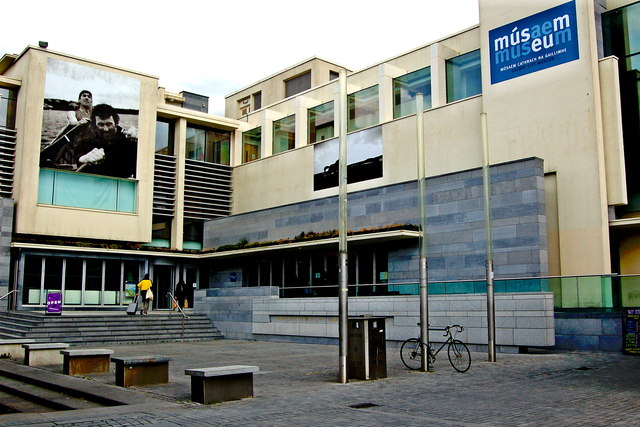
Galway Spent €28,000 Replacing a Logo From 1984. The Public Hated It, So the Council Switched Off the Comments and Called the Exercise a Once-in-a-Generation Opportunity.
Wikimedia Commons / CC BY-SA 2.0
An authority spent twenty-eight thousand euro on better communication with stakeholders, discovered what the stakeholders wished to communicate, and turned off the facility for receiving it. The sentence survives intact in the press release. Vanity of this kind is not the belief that one is admired; it is the more durable belief that being admired is an administrative matter, achievable by procurement, and that the public is a design problem rather than an audience. Galway's citizens, meanwhile, are flying a flag with a letter on it. They won the argument in 1984 and have not been told.
The Supreme Court Read a High Court's Murder Judgment and Said It Had Been Done in a Very Slipshod Manner and Without Any Understanding of Law.
Wikimedia Commons / CC BY-SA 4.0
The distinction the High Court is said to have missed is taught in the first term, and the judges who missed it hold the power to decide for a lifetime. Hierarchy exists to catch this, and here it did; what it cannot catch is the serenity required to deliver a judgment one does not understand, in a case where the sentence runs for decades, and sign it. Confidence does not come from competence. It never has. It comes from never yet having been read by anyone senior.
The App Was Sold on the Promise That Its Artificial Intelligence Would Make Punters a Profit. The Regulator Asked for the Evidence. There Was None.
Three firms on one morning, all selling the same article, which is not software and not education but the assurance that the arithmetic has been repealed on the buyer's behalf. The machinery changes — a model, a platform, a scorecast — and the proposition never does: you, specifically, have found the gap in a system that takes money from everybody else. The regulator's question was merely whether this could be shown. It is the one question the trade has never been able to survive, and it has never once needed to.
He Was Arrested for Drink-Driving and Convicted. The Commission Says That During the Investigation He Mentioned to the Officers What He Did for a Living.
Wikimedia Commons / CC BY 2.0
The drink-driving is the lesser charge, and the commission has filed it second for a reason. What the robe is alleged to have produced is not the offence but the reflex: stopped at the roadside, in the plain condition of a man who has had too much, he reached for his office as if it were a document that explains him. It is the purest form of the thing the section exists to catch — the conviction that judgment is a chair one sits in rather than a standard one meets, and that the chair comes with you into the street.