Special Edition
The Confident Men: A Bipartisan History of Political Folly
On the folly of statecraft — the one enterprise in which the cleverest men alive have most reliably contrived to arrive precisely where they began, or worse.
There is a special grandeur to political folly that the private variety can never attain. The fool in the street ruins only himself; the fool in the cabinet ruins a generation, and does it with the full apparatus of the state behind him — armies, treasuries, the printing press, the historical record he is busily falsifying. What follows is not a partisan indictment. Stupidity in high office is the republic's, the monarchy's, and the empire's only genuinely non-partisan achievement, drawn impartially from every faction and every century. The thread binding these men across two thousand years is not ignorance — ignorance is forgivable and curable — but certainty: the serene conviction of the powerful that the world will bend to a confidence it has done nothing to earn. It does not bend. It never has. That is the whole of the lesson, and humanity has declined, with remarkable consistency, to learn it.
01
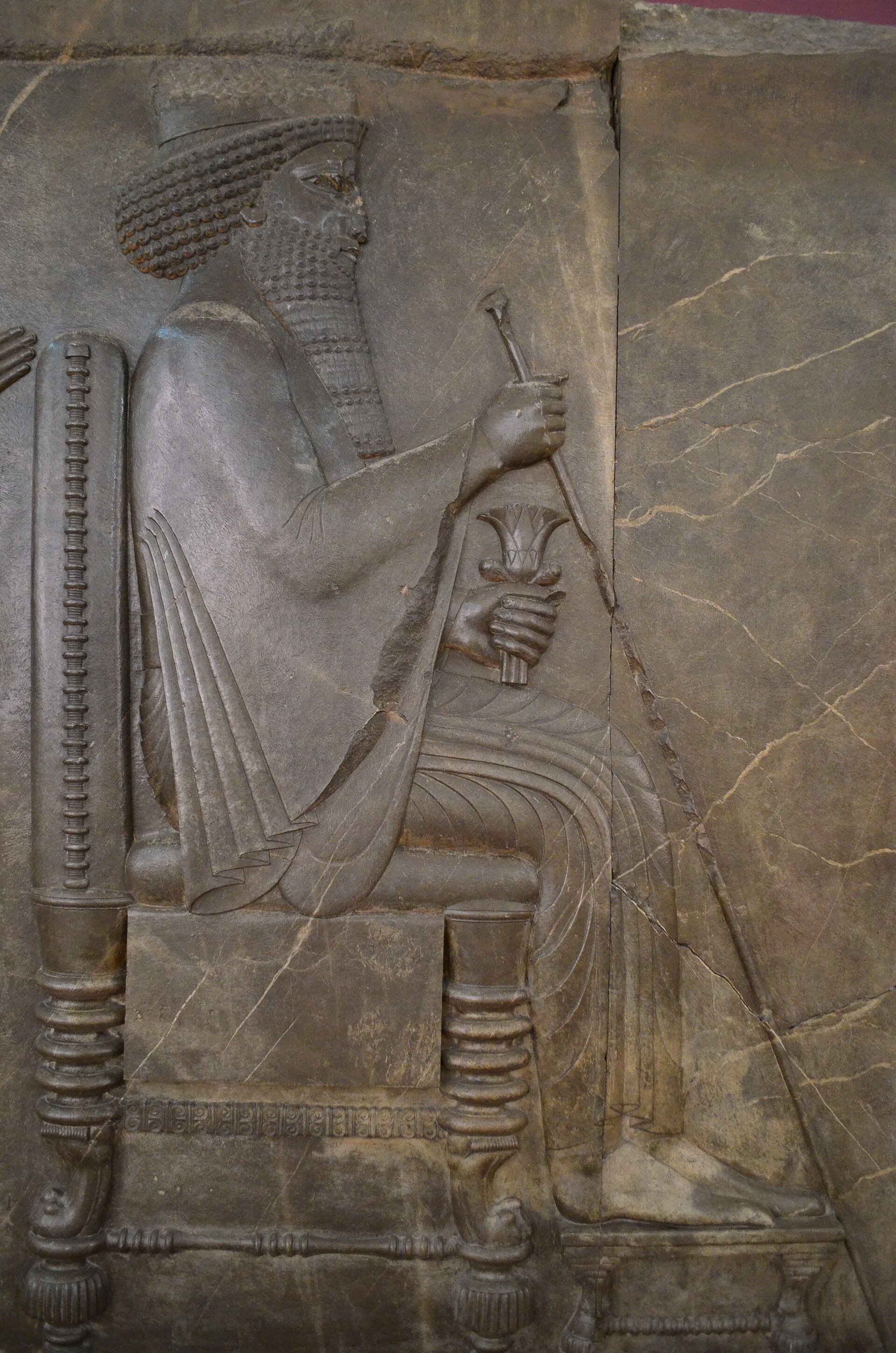
The King Who Whipped the Sea — Xerxes I of Persia, 480 BC
Darafsh / Wikimedia Commons / CC BY-SA 3.0
Xerxes, King of Kings, master of the largest empire the world had yet seen, set out to conquer Greece and required a bridge across the Hellespont to do it. He built one. A storm destroyed it. And here the sovereign of half the known world arrived at the decision that has preserved his name: he ordered the strait itself given three hundred lashes, had it branded with hot irons, and dispatched men to shout a rebuke at the water for its insolence. The bridge was then rebuilt — by engineers rather than by flogging — and the army crossed. The campaign ended, a year later, in ruin at Salamis and Plataea.
The verdict: The story survives only through Herodotus, who never met a Persian vanity he would not embroider, and should be read as parable rather than court record. But the parable is immortal because the temptation is: power, sufficiently absolute, comes to believe that reality is a subordinate who can be disciplined. The sea does not take notes.
Source: Herodotus, Histories 7.34–35
02
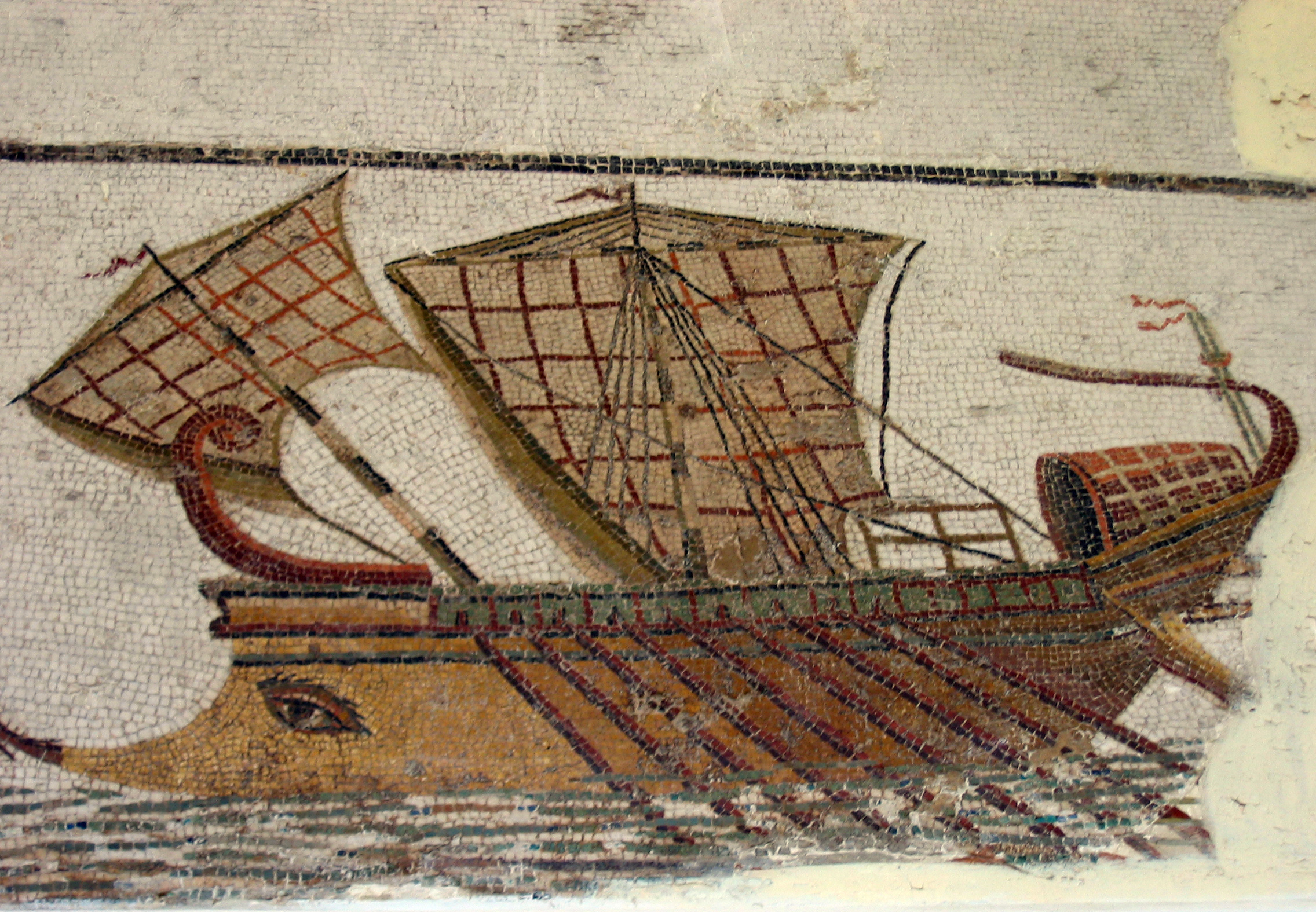
Let Them Drink — Publius Claudius Pulcher, Rome, 249 BC
Wikimedia Commons / public domain
Before the naval Battle of Drepana, the Roman consul Claudius Pulcher performed the customary augury: sacred chickens were offered grain, and their eating was read as the gods' assent to battle. The chickens declined to eat — a dire omen, and a clear instruction to wait. Claudius, unwilling to be governed by poultry, had the birds thrown overboard with the remark that if they would not eat, they could drink. He then gave battle and lost most of the Roman fleet, one of the worst naval defeats in the Republic's history. He was recalled, tried, and disgraced.
The verdict: Preserved by Cicero and Livy and polished by centuries of retelling, so treat the exact quip as legend. The folly beneath it is not superstition but its opposite — a man so contemptuous of any check on his will that he would drown the warning rather than heed it. The omen, as it happens, was correct.
Source: Cicero, De Natura Deorum; Livy, Periochae 19
03
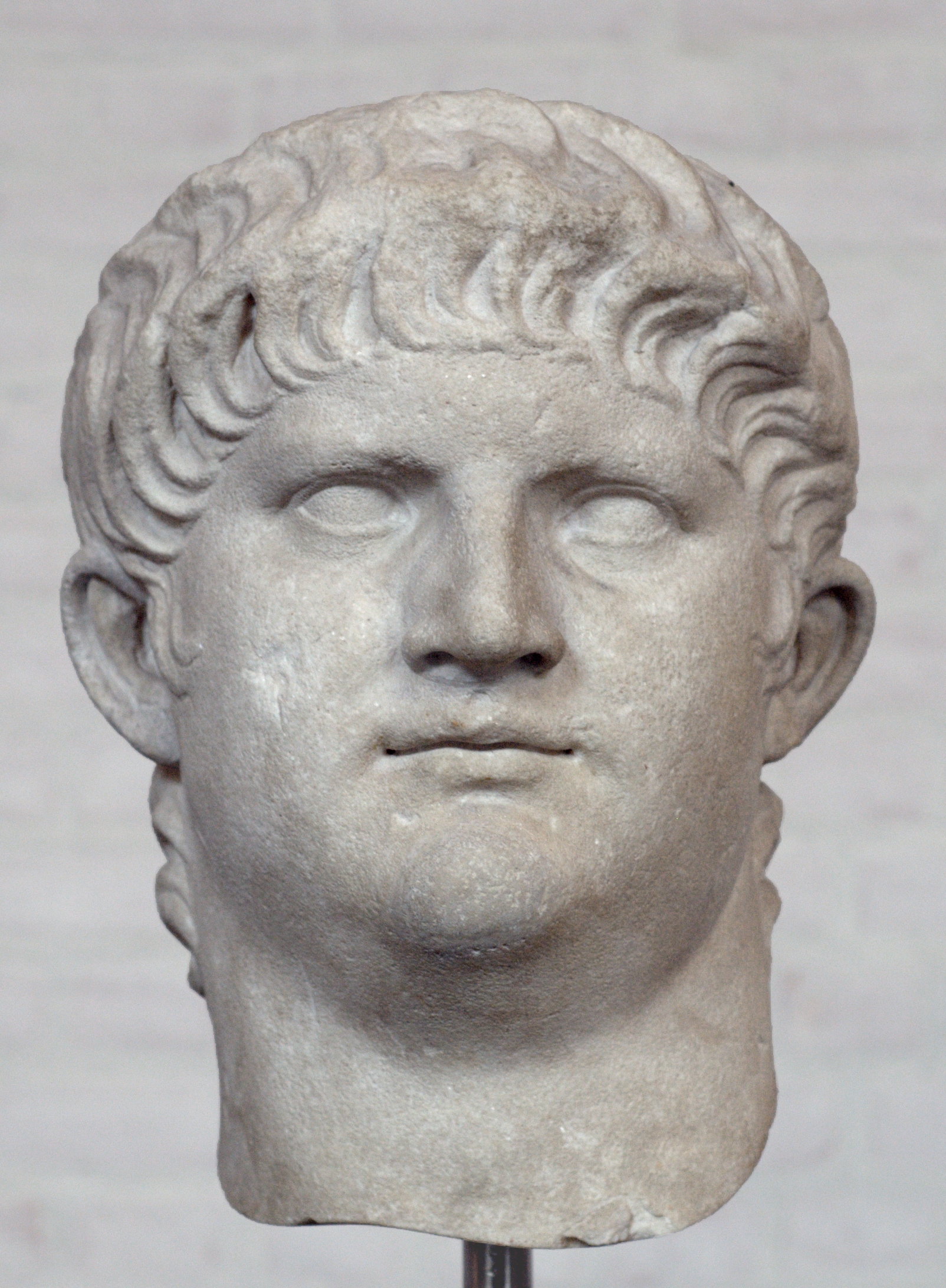
The Emperor's Alibi — Nero, Rome, 64 AD
Wikimedia Commons / public domain
When the Great Fire consumed much of Rome in July of 64, the emperor Nero acquired the imperishable image of a monster serenading the flames from a rooftop with his lyre. He did not. The fiddle would not be invented for a millennium, Nero was reportedly at Antium when the fire began, and Tacitus records that he in fact organized relief and opened his own gardens to the homeless. What Tacitus also records is that none of it worked: the rumor that Nero had sung of Troy's burning while his own city burned took hold and never let go, and to deflect it he blamed the Christians — the first state persecution.
The verdict: The genuine folly is subtler and worse than the legend. A ruler so distrusted that his charity read as arson could not clear his name by doing good; he could only find someone to burn. The lyre is a fable. The scapegoat was policy.
Source: Tacitus, Annals 15.38–44
23 special editions. A new one every fortnight. The daily catalogue of human folly — free, every morning, from a trial lawyer who has run out of patience.
No algorithms. No engagement bait. Just the view from the abyss.
04
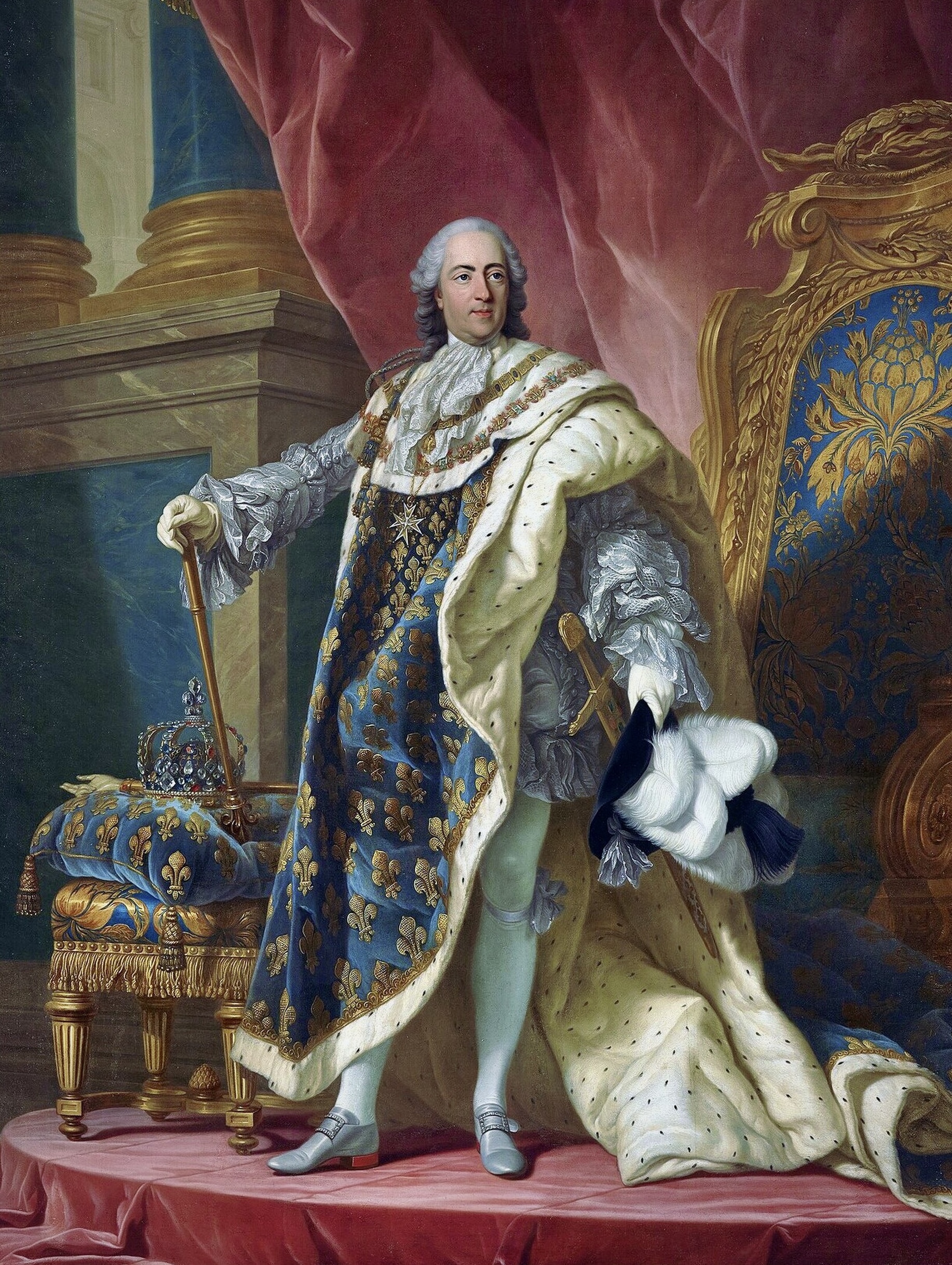
The King Who Won and Kept Nothing — Louis XV of France, 1748
Wikimedia Commons / public domain
For eight years France fought the War of the Austrian Succession, and fought it well. Marshal Saxe broke the allied army at Fontenoy in 1745 — one of the great French feats of arms of the century — and French troops occupied the whole of the Austrian Netherlands. Then, at the Peace of Aix-la-Chapelle in 1748, Louis XV handed almost all of it back. He wished to be seen not as a conqueror but as the arbiter of Europe, the magnanimous roi de paix, and so he traded a decade of victories for a reputation. France gained essentially nothing; it was even obliged to expel the exiled Stuart pretender, who had to be arrested in Paris to make him go.
The verdict: The market women of Paris rendered the verdict at the time, and it has never been improved upon: bête comme la paix — as stupid as the peace. A nation had bled for eight years to stand exactly where it started, so that its king could enjoy the applause of a moderation nobody had asked him for. Vanity is expensive; magnanimous vanity is ruinous.
Source: Treaty of Aix-la-Chapelle (1748)
05
The Minister Who Lost on Command — Frederick, Lord North, Britain, 1770–1782
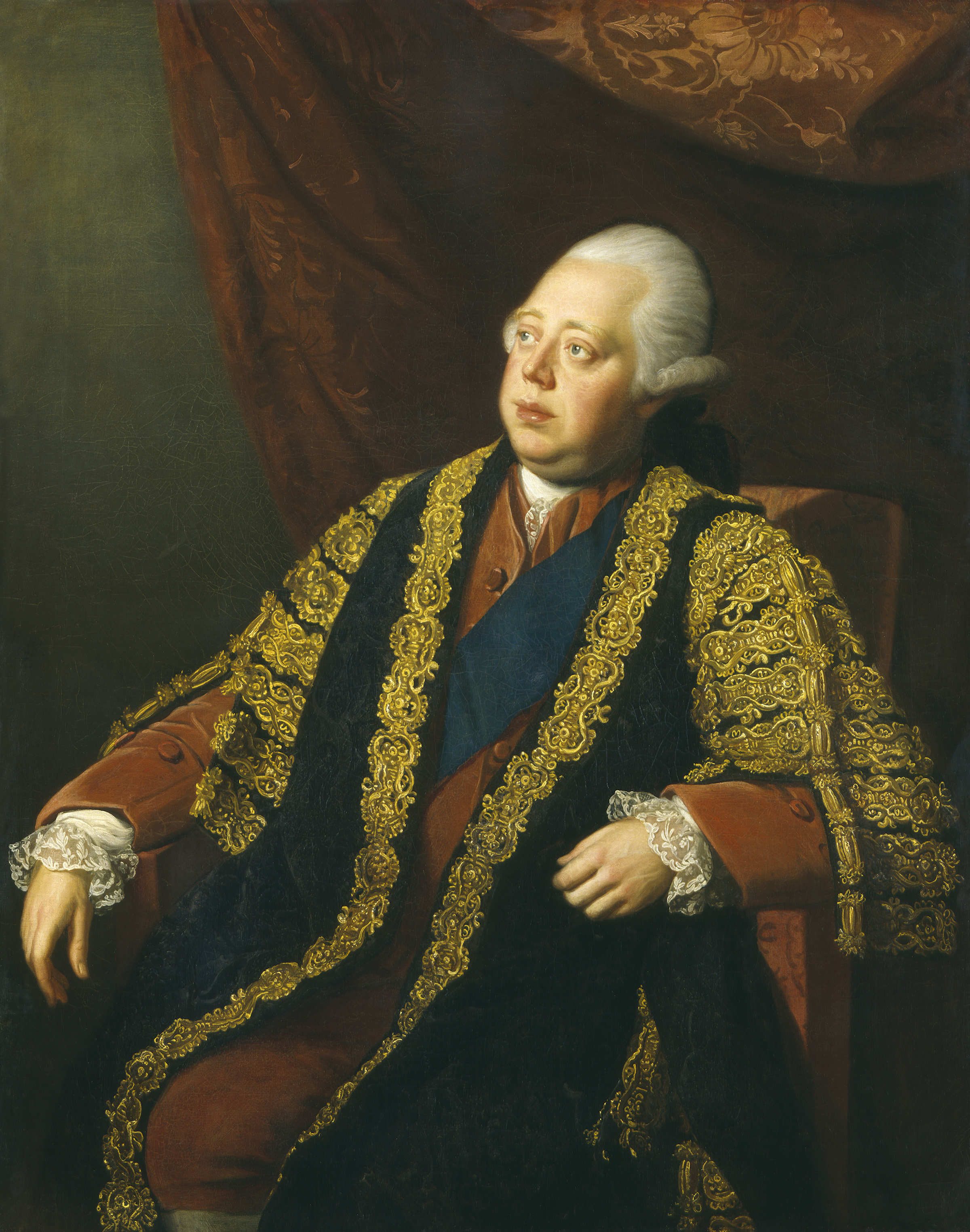
National Portrait Gallery via Wikimedia Commons / public domain
Lord North governed Britain through the American war he did not believe could be won. As the colonies slipped away he grew steadily more convinced the cause was lost and repeatedly begged to resign; George III, whose war it truly was, refused to let him go and pressed him to prosecute it further. So North stayed, and executed a policy he privately judged doomed, for years. When word of the surrender at Yorktown reached him in 1781 he is said to have received it like a cannonball to the chest — 'Oh God, it is all over' — and yet he remained in office until March of 1782.
The verdict: There is a particular folly reserved for the capable man who knows better and complies anyway. North was no fool; that is precisely the indictment. He surrendered his own judgment to his king's obstinacy and lost an empire on someone else's certainty — which is the most modern form of political failure there is.
Source: Frederick North, Lord North
06
The Madness of Men — The South Sea Bubble, Britain, 1720
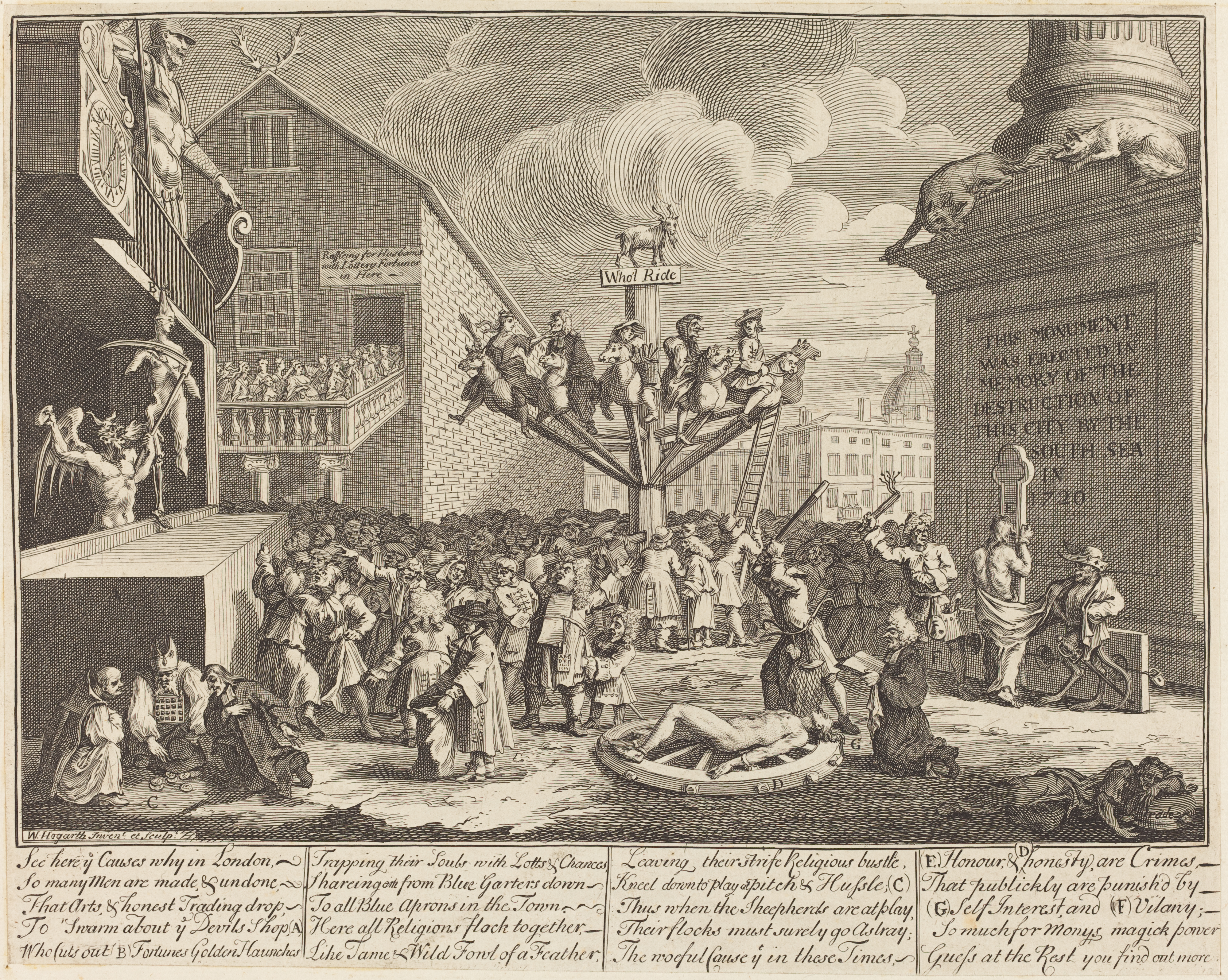
National Gallery of Art via Wikimedia Commons / public domain
In 1720 the South Sea Company, buoyed by promises of fabulous trade and the connivance of Parliament, sent its shares to the moon on nothing but appetite. Everyone bought; the price multiplied; and in the autumn it collapsed, ruining aristocrats, tradesmen, and Members of Parliament alike. Among the ruined was Isaac Newton, who had gotten in early, sold at a tidy profit, watched the mania climb still higher without him, bought back in near the top, and lost a fortune — some £20,000 — when it fell.
The verdict: Newton is supposed to have said he could calculate the motions of the heavenly bodies but not the madness of men; the line is very likely later embroidery, so we will not put words in his mouth. But the fact requires no embellishment. The most powerful mind of the age could model the heavens and was still dragged under by the oldest force in economics — the fear of watching a fool get rich without you.
Source: South Sea Company / financial bubble of 1720
07
Martin Van Ruin — Martin Van Buren, United States, 1837–1841
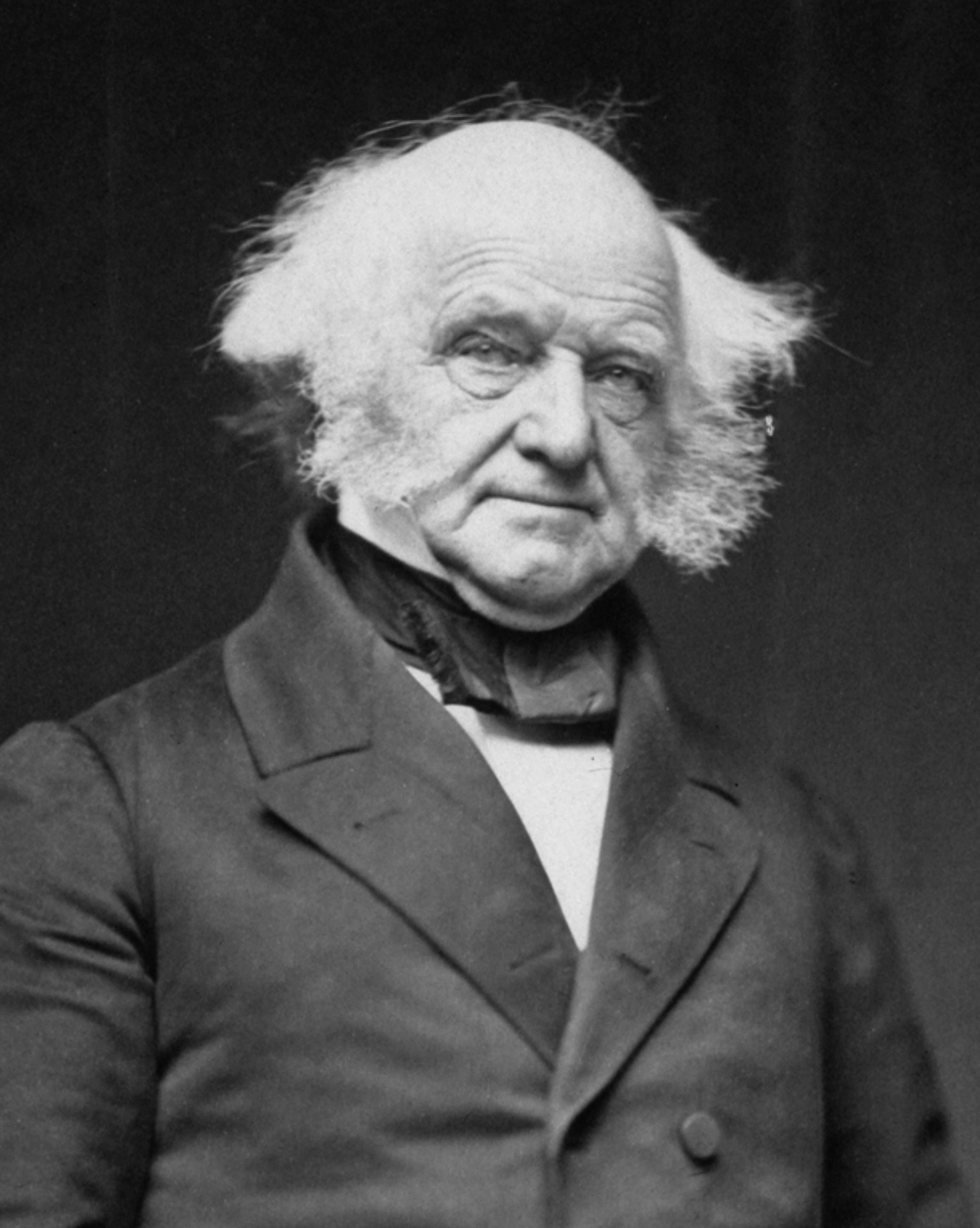
Mathew Brady via Wikimedia Commons / public domain
Van Buren had the worst possible luck and the worst possible timing: the Panic of 1837 detonated within weeks of his inauguration and dragged the country into a long depression that opponents cheerfully hung around his neck as 'Martin Van Ruin.' Then, in 1840, the Whigs did something genuinely new. They ran William Henry Harrison — a man of Virginia gentry — as a log-cabin, hard-cider frontier commoner, and painted the tavern-keeper's son from Kinderhook as an effete aristocrat sipping from finger bowls. Congressman Charles Ogle's three-day 'Gold Spoon Oration' on the 'regal splendor' of Van Buren's White House was printed by the thousands. It was largely fiction. It worked.
The verdict: Van Buren was the shrewdest political operator of his generation — the man who built the modern party machine — and he was destroyed by the machine he perfected, turned against him. The genuinely humble man lost the man-of-the-people contest to an actual patrician playing dress-up. The electorate will trade a competent administrator for a slogan and a jug of cider, and it will do so every time it is asked.
Source: Gold Spoon Oration (1840)
08
The Telegram That Declared War on Its Sender — The Zimmermann Telegram, Germany, 1917
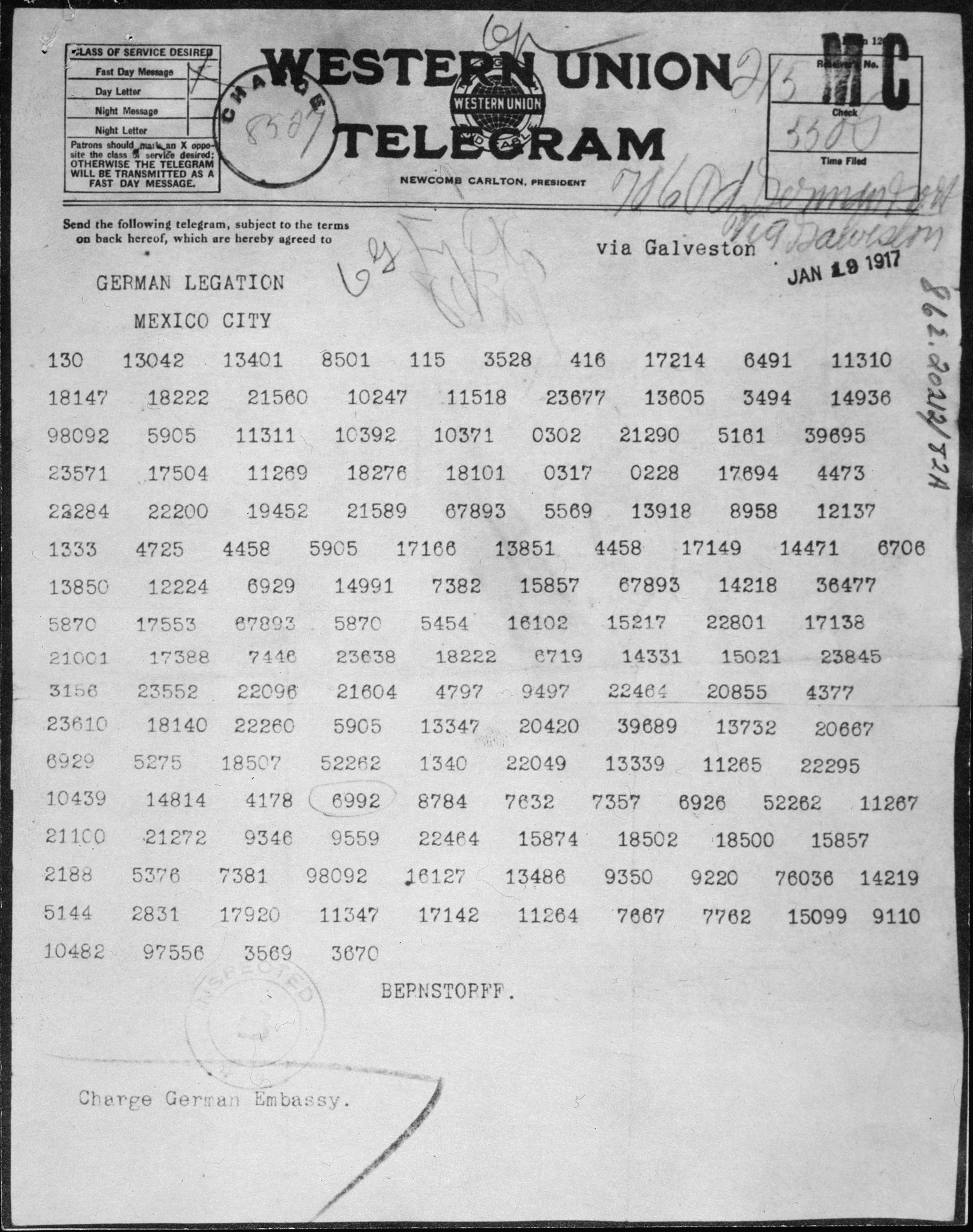
U.S. National Archives / public domain
In January 1917, with the United States still neutral, German Foreign Secretary Arthur Zimmermann sent a coded cable proposing that, should America enter the war, Mexico ally with Germany and be rewarded afterward with Texas, New Mexico, and Arizona. British naval intelligence — the celebrated Room 40 — intercepted and decrypted it. Its publication in late February enraged American opinion, and rather than dismiss it as a forgery, Zimmermann inexplicably confirmed on March 3 that it was genuine. The United States declared war the following month.
The verdict: It is difficult to design a diplomatic act more perfectly self-defeating: a secret scheme to keep America out of the war became the single most effective argument for bringing America in — and its author, handed a chance to deny it, chose instead to sign his name to it a second time. Some men are undone by their enemies. Zimmermann was undone by his own honesty about his own folly.
Source: Zimmermann Telegram
09
The Treaty That Abolished War — The Kellogg-Briand Pact, 1928
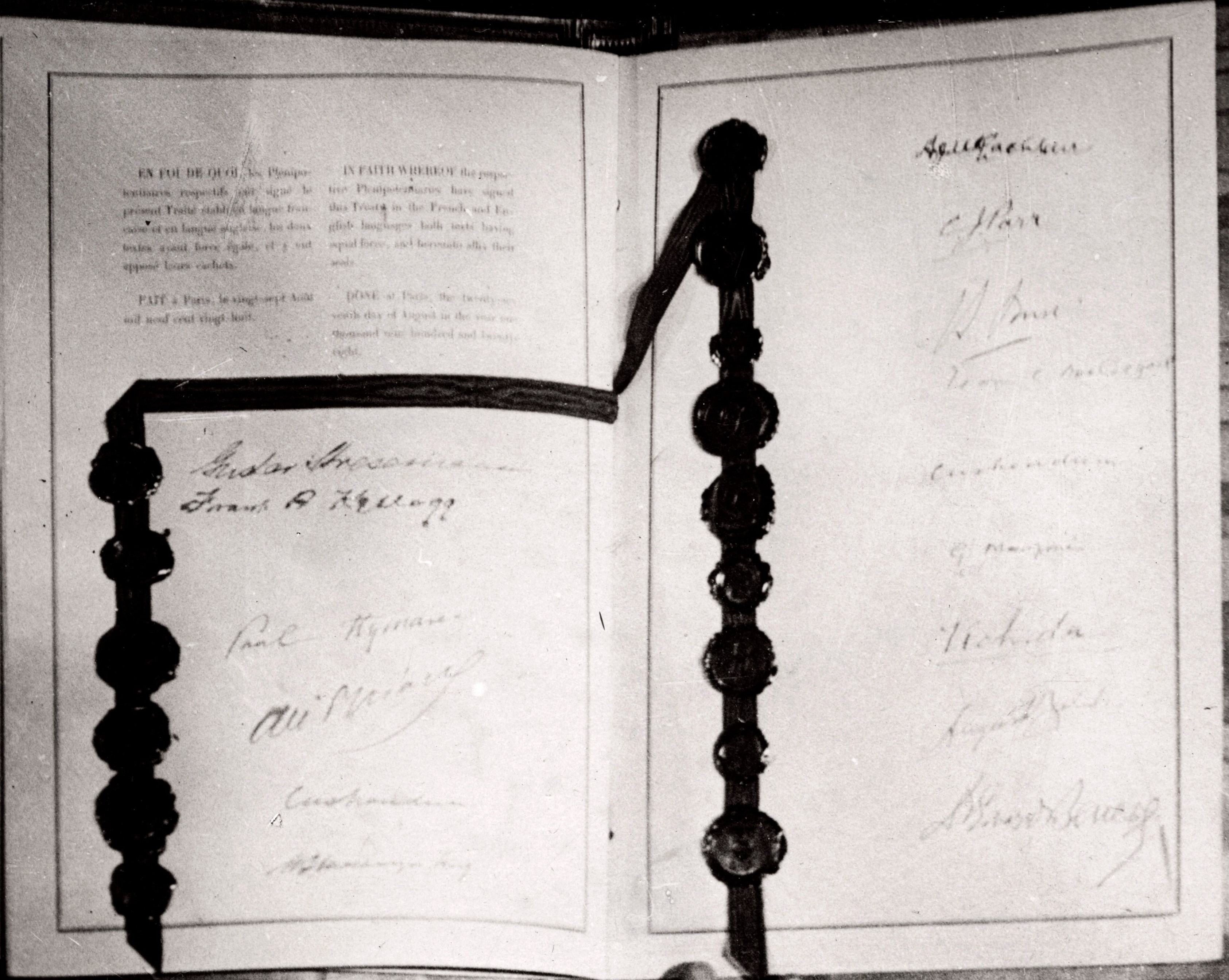
Wikimedia Commons / public domain
On August 27, 1928, in Paris, the United States and France led some sixty nations in signing a solemn instrument that renounced war as an instrument of national policy and pledged to settle every dispute by peaceful means. It was hailed as a landmark of civilization. It contained no enforcement mechanism, no penalty, no army, and no consequence of any kind for breaking it. Among its original signatories were Germany, Italy, and Japan.
The verdict: Within a dozen years the very nations that had signed away war were conducting the most destructive one in human history. The pact remains the purest monument ever erected to the political conviction that a thing can be abolished by being disapproved of in writing — the belief that evil is a clerical problem, solvable by a sufficiently well-attended signing ceremony.
Source: Kellogg–Briand Pact
10
The Vice That Funded the Mob — Prohibition, United States, 1920–1933
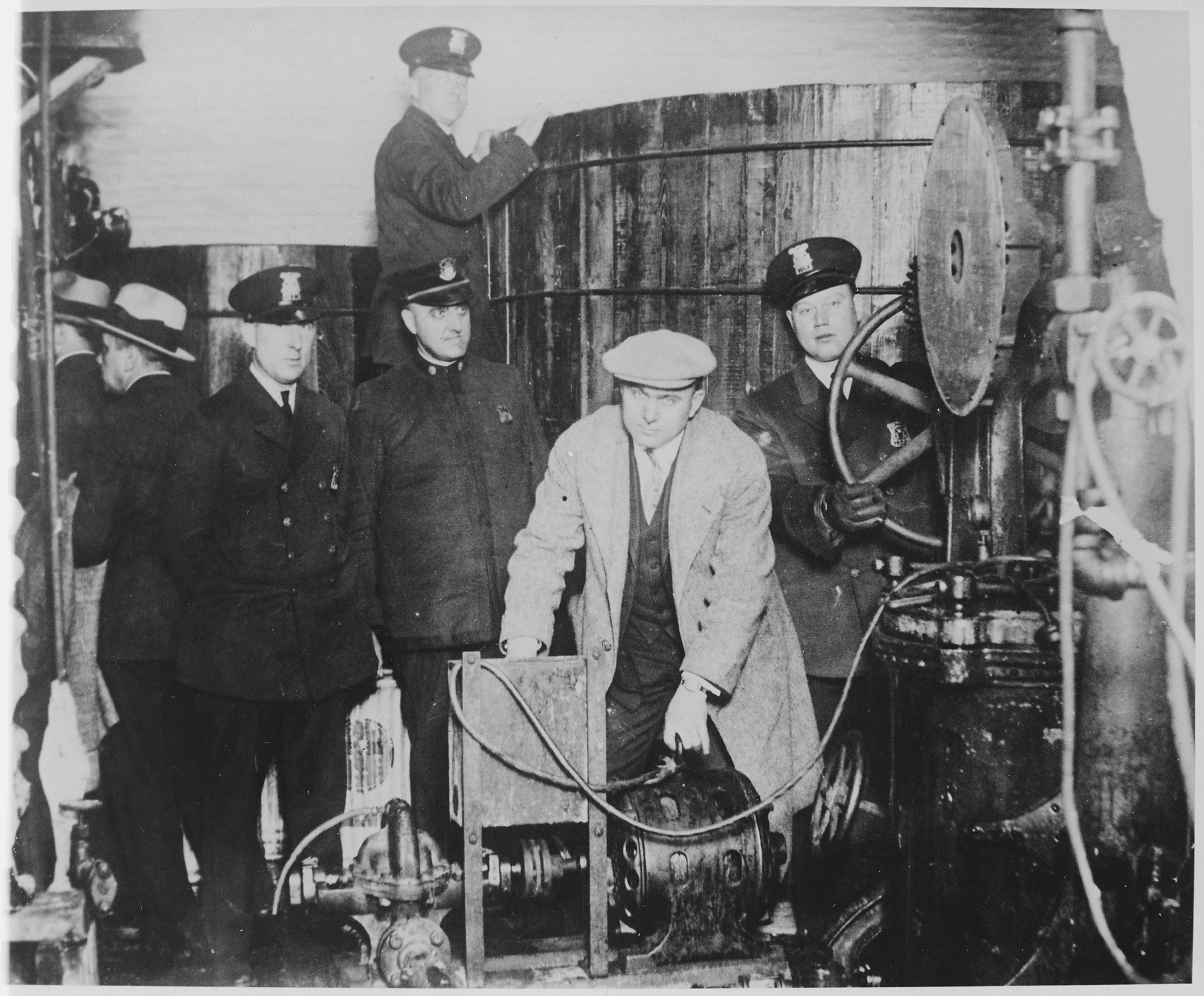
U.S. National Archives / public domain
In 1920 the United States amended its Constitution to abolish the manufacture and sale of alcohol, on the confident theory that a people could be made virtuous by statute. The people declined. Drinking did not stop; it went underground, into speakeasies and bootleg stills, and the enormous demand — now illegal — was met by whoever was willing to break the law to supply it. The result was not a sober republic but the richest, best-organized criminal enterprise the country had ever seen, with Al Capone as its representative man. In 1933, thirteen years later, the nation amended its Constitution again to undo the first amendment — the only time in American history a constitutional amendment has been repealed outright.
The verdict: The lesson was available in advance to anyone who cared to think about it, and has been ignored in every prohibition since. You cannot legislate away an appetite; you can only decide who profits from it. Deny the sale to the licensed and the taxed, and you have not closed the market — you have merely awarded it to the armed.
Source: Prohibition in the United States
11
Peace For Our Time — Neville Chamberlain, Britain, 1938
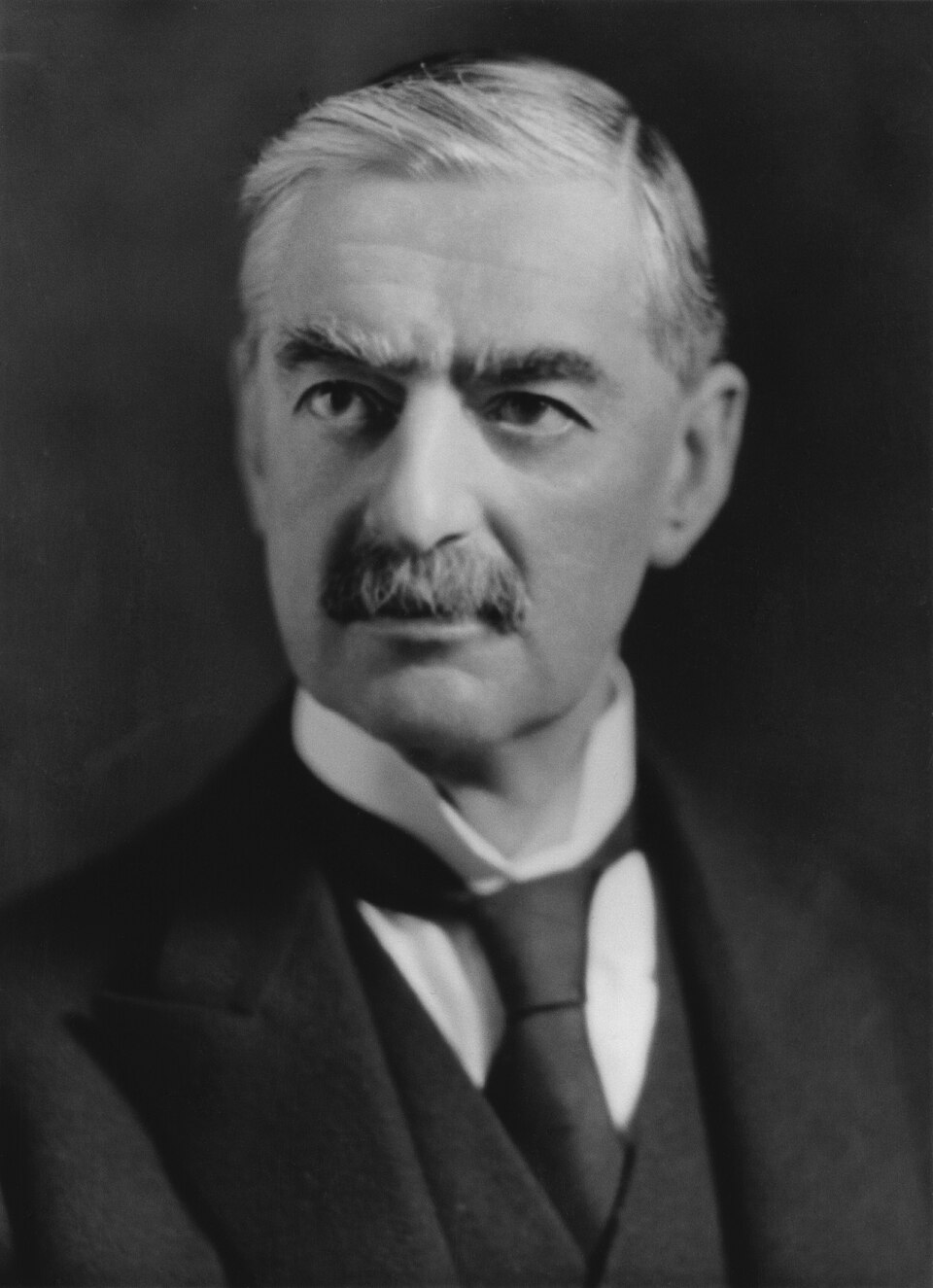
Wikimedia Commons / public domain
Returning from Munich in September 1938, having agreed to hand Hitler the Sudetenland in exchange for a signature, Neville Chamberlain stepped off the plane, waved the paper for the cameras, and told a relieved crowd at Downing Street that he believed it meant 'peace for our time.' He had trusted the written word of a serial aggressor. In March 1939 Germany seized the rest of Czechoslovakia; in September the Second World War began.
The verdict: The phrase is almost always misquoted as 'peace in our time,' which is gentler; the actual words were 'peace for our time,' which is worse, because it claims a term. Appeasement was not cowardice — Chamberlain was a serious and decent man — but something more dangerous: the statesman's faith that his own reasonableness must be contagious, that a man who has broken every promise will keep this one because it was made to him personally.
Source: Munich Agreement
12
I'm Not a Witch — Christine O'Donnell, Delaware, 2010

Gage Skidmore / Wikimedia Commons / CC BY-SA 3.0
Running for the United States Senate in 2010, the candidate was ambushed by old television footage in which she had confessed to having 'dabbled into witchcraft.' A campaign is a machine for controlling what voters think about, and the iron rule is that you never repeat the attack in your own voice. Her campaign's response was a paid television advertisement that opened with the candidate looking into the camera and saying: 'I'm not a witch. I'm nothing you've heard. I'm you.' She lost.
The verdict: It is the smallest folly on this list and in some ways the purest, because it required no empire, no army, and no depression — only a microphone and the conviction that the way out of a hole is to describe the hole, on television, at your own expense. The oldest wisdom in politics is that you do not repeat the charge. She bought airtime to repeat the charge.
Source: Christine O'Donnell
23 special editions. A new one every fortnight. The daily catalogue of human folly — free, every morning, from a trial lawyer who has run out of patience.