Special Edition
Peer Reviewed: Scholars Behaving Badly
A century of professors, presidents and prize-winners caught manufacturing the very evidence they demanded of everyone else — from a filed orangutan tooth in a Sussex gravel pit to a Harvard chair in honesty.
The laity imagines science as a machine for catching liars. It is nothing of the kind. It is a machine for propagating claims at speed, and it runs on the assumption — necessary, unavoidable, and routinely fatal — that the man reporting the number actually took the measurement. Peer review does not repeat the experiment. It reads the paper. Which means the entire apparatus of modern knowledge, the citations and the impact factors and the grant renewals and the endowed chairs, rests finally on a gentleman's agreement that no gentleman is checking. What follows is fifteen cases in which somebody noticed. They are arranged chronologically, so that the reader may watch the fraud modernize — from a forger with a file and a bottle of iron stain to a laboratory duplicating pixels — while the underlying vanity holds perfectly still. Note what nearly every case has in common: the fabricator was not caught by the journal, or the university, or the funding body, or the Nobel committee. He was caught by a graduate student, a blogger, a junior colleague, or an outsider with nothing to lose, and in several instances the institution's first instinct was to protect the eminence and doubt the whistle.
01
The Missing Link Was a Medieval Skull, an Orangutan's Jaw, and a File — Piltdown, Sussex, 1912–1953
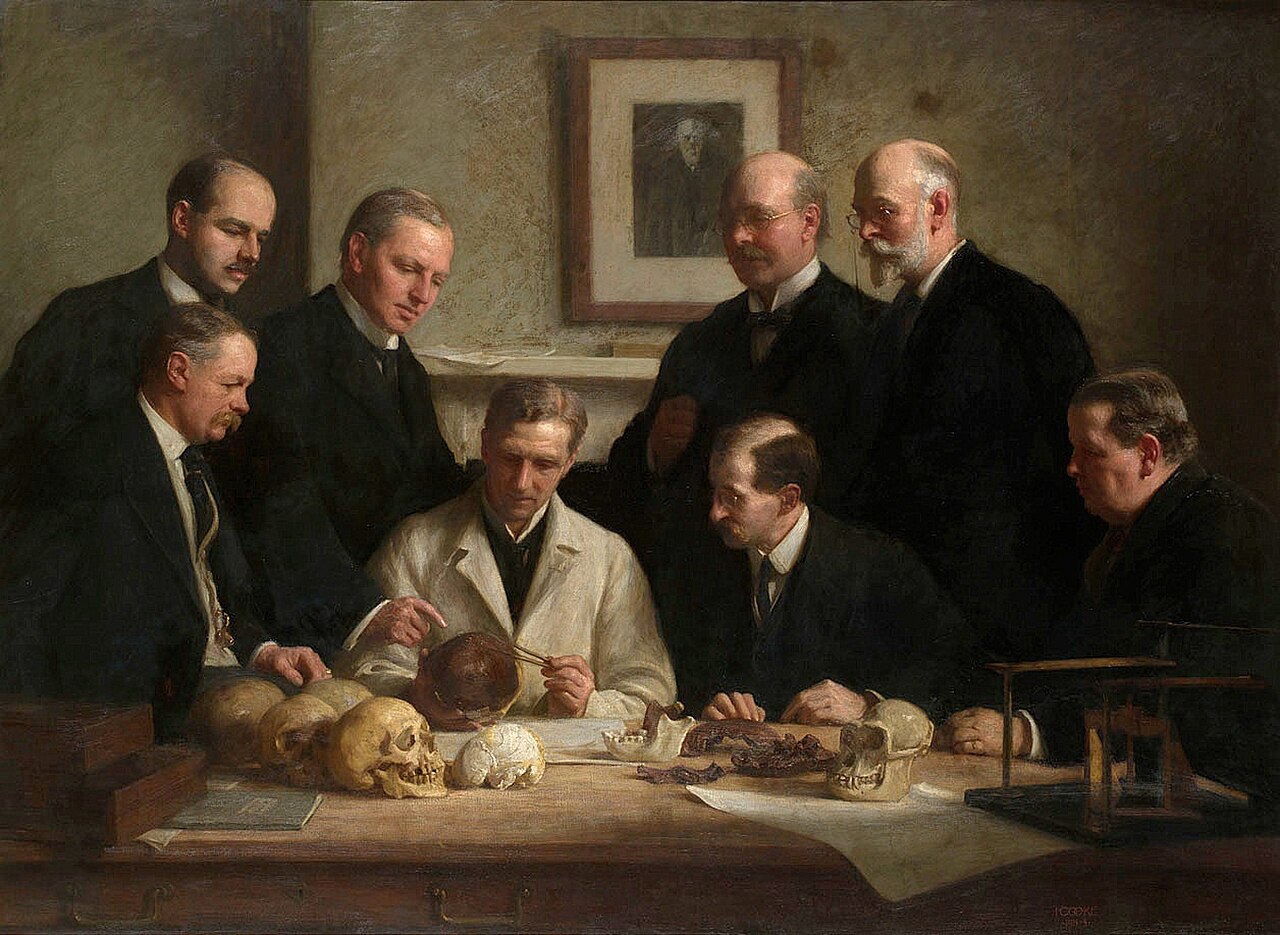
Announced in December 1912, Piltdown Man was hailed as the missing link — an English ancestor, conveniently, at a moment when the French and Germans had all the good fossils. It held its place in the textbooks for forty-one years. When Kenneth Oakley, Wilfrid Le Gros Clark and Joseph Weiner finally applied fluorine dating in 1953, the specimen dissolved into its parts: a medieval human skull, the jaw of an orangutan perhaps five hundred years dead, and chimpanzee teeth, the lot stained with iron solution and chromic acid to counterfeit age. The teeth carried microscopic file marks. An eight-year review published in 2016 concluded the amateur archaeologist Charles Dawson did it alone, motivated by a hunger for professional recognition and a fellowship of the Royal Society.
The verdict: The scandal is not that a hoaxer filed a tooth; it is that four decades of professionals looked at a skull assembled from three species and saw what the national mood required them to see. Piltdown was not a failure of technology. It was a triumph of wanting.
Source: Wikipedia — Piltdown Man
02
The Agronomist Who Abolished the Gene and Starved a Continent to Prove It — Trofim Lysenko, USSR, 1930s–1965
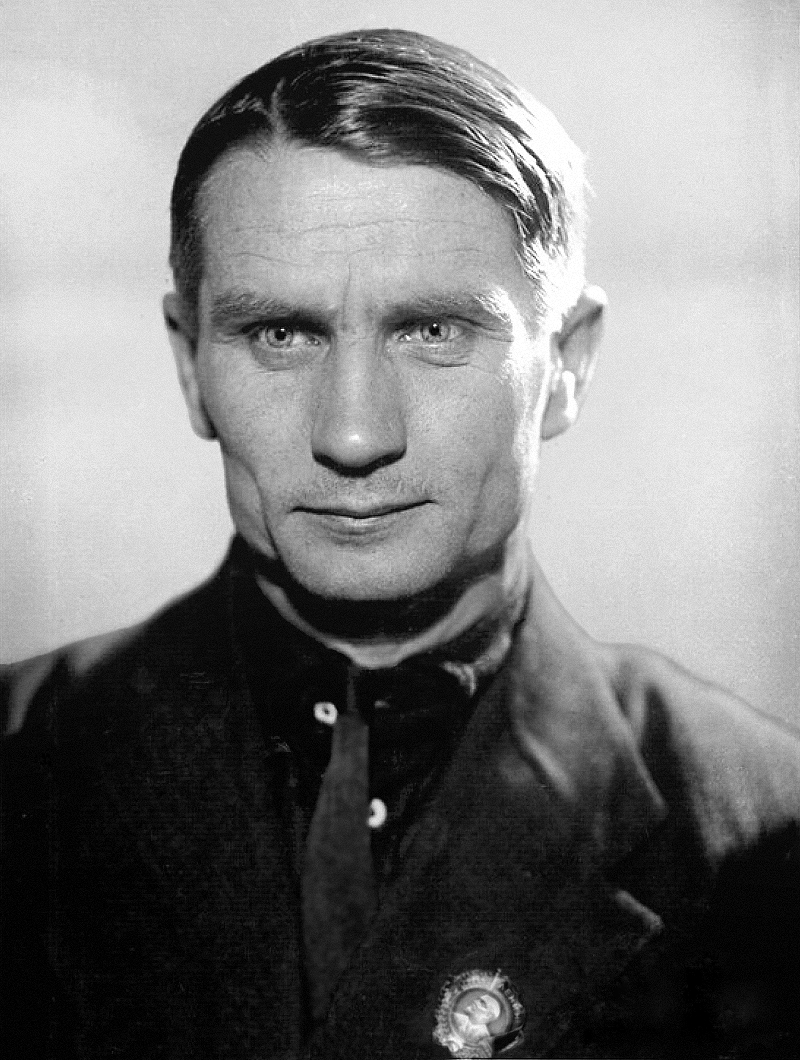
Lysenko rejected Mendelian inheritance in favour of the doctrine that acquired characteristics pass to offspring — that a seed could be schooled. Stalin liked the promise of yields and liked the peasant pedigree, and by 1940 Lysenko ran the Institute of Genetics. The dissenters were not refuted; they were removed. Nikolai Vavilov, the greatest plant geneticist of his generation, was arrested in August 1940 and died in prison in 1943; Agol, Levit and Karpechenko were executed or sent to the camps. At the VASKhNIL session of August 1948 Lysenkoism was declared the only correct theory, and Soviet genetics ceased to exist by decree. Only after Stalin's death — and Sakharov's denunciation in 1964 — was Lysenko stripped of his directorship in 1965.
The verdict: Every other entry here is a man lying about an experiment. This is a state lying about reality and shooting the men who could tell. It is the outer limit of the same disease: when a theory cannot survive a fair test, the tempting solution has always been to abolish fair tests.
Source: Wikipedia — Trofim Lysenko
03
A Physicist Submitted Deliberate Nonsense About Quantum Gravity and the Journal Printed It — Alan Sokal and Social Text, 1996
Sokal, a physicist at NYU, composed an article titled "Transgressing the Boundaries: Towards a Transformative Hermeneutics of Quantum Gravity" — a farrago of fashionable citation and physics he knew to be gibberish, arguing that gravity itself was a social construct. Social Text published it in May 1996, in its Science Wars issue. The journal did not practise peer review at the time, and the manuscript was never shown to a physicist. Three weeks later Sokal revealed the hoax in Lingua Franca. The editors' defence — that they had taken the piece in good faith from a scientist writing outside his field — was, awkwardly, the whole of his point.
The verdict: The lesson was never that the humanities are stupid; it was that flattery is a solvent. The paper was accepted because it told its readers their theories governed physics, and no proposition is harder to peer-review than the one you were hoping to hear.
Source: Wikipedia — Sokal affair
25 special editions. A new one every fortnight. The daily catalogue of human folly — free, every morning, from a trial lawyer who has run out of patience.
No algorithms. No engagement bait. Just the view from the abyss.
04
Bell Labs' Prodigy Was Producing a Breakthrough Every Eight Days, Which Should Have Been the Tell — Jan Hendrik Schön, 2002
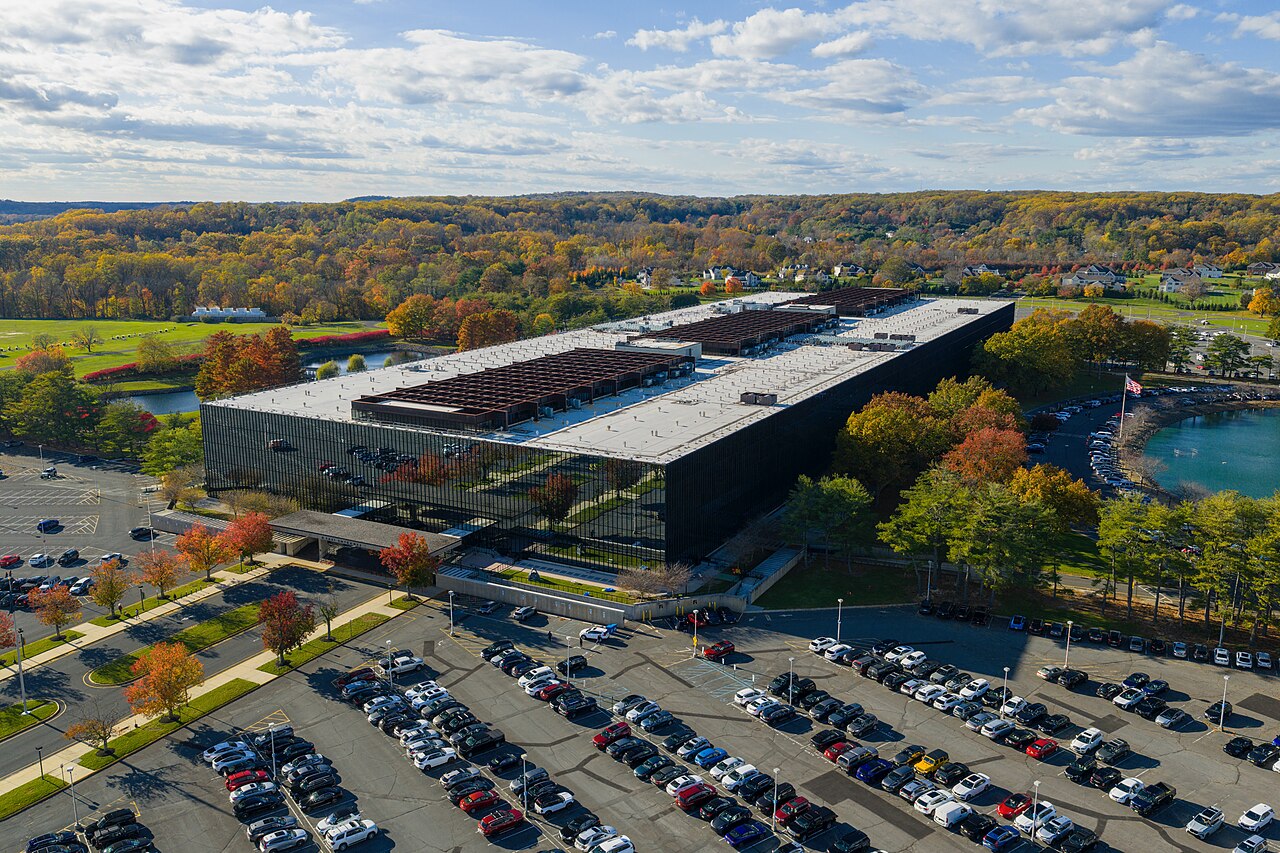
Schön joined Bell Labs in 1998 and published at a rate no experimentalist has ever sustained honestly — some ninety papers, a run of them in Science and Nature, announcing molecular-scale transistors and organic superconductors. His graphs were beautiful. They were also, in several cases, the identical curve relabelled for a different experiment, which is how he was finally caught: not by a referee, but by physicists who noticed the same noise appearing in two unrelated figures. A committee found misconduct in at least sixteen cases in September 2002. He was fired, the papers were withdrawn, and in 2004 the University of Konstanz revoked his doctorate.
The verdict: Consider what the productivity itself was telling everyone. Co-authors, editors and referees watched a young man overturn condensed-matter physics roughly monthly and concluded they were witnessing genius rather than an impossibility. Improbable virtue is easier to believe in than improbable vice, and that asymmetry is the fraudster's entire working capital.
Source: American Physical Society — September 2002: Schön Scandal Report is Released
05
The National Hero of Cloning Was Convicted of Everything Except the Fraud — Hwang Woo-suk, Seoul, 2005–2009
Hwang's 2004 and 2005 papers in Science claimed patient-matched embryonic stem-cell lines and made him a Korean national figure, complete with commemorative stamps. Seoul National University's investigation found the lines fabricated. The criminal courts, curiously, reached a narrower verdict: in October 2009 he was sentenced to two years, suspended for three, for embezzling some 830 million won of research funding and for violating bioethics law by procuring human eggs improperly — but he was cleared of fraud, the judges reasoning that he had not enriched himself personally. The Seoul High Court upheld it; the Supreme Court let it stand.
The verdict: The acquittal on fraud is the instructive part. He had not stolen money from a mark; he had stolen belief from a country, and the law had no good name for that. A discipline that runs on credence has no statute covering the theft of it.
Source: Science — Korean Supreme Court Upholds Disgraced Cloner's Criminal Sentence
06
Harvard's Authority on the Biological Origins of Morality Falsified the Data — Marc Hauser, 2010–2012

Hauser was the celebrated Harvard psychologist of moral cognition — the man explaining where our ethical instincts come from. In 2012 the federal Office of Research Integrity concluded he had committed misconduct. He had fabricated half the data in a bar graph in a 2002 Cognition paper on learning in cotton-top tamarins; the published results, investigators found, did not match the videotape of the actual experiment, and "the results of the experiment were therefore knowingly and falsely reported by Prof. Hauser." In manuscripts sent to Cognition, Science and Nature he reported that sixteen of sixteen monkeys responded more strongly to ungrammatical sequences. Thirteen had. Harvard suspended him for a year; he resigned in 2011.
The verdict: The monkeys were the honest party in the room. There is a particular vertigo in a scholar of innate morality deciding, at the coding stage, that thirteen was near enough to sixteen — the discovery that expertise in a virtue confers no share in it whatsoever.
Source: Science — Harvard Psychology Researcher Committed Fraud, U.S. Investigation Concludes
07
Fifty-Eight Retractions, and the Man Who Fabricated Them Was Head of Department — Diederik Stapel, Tilburg, 2011
Stapel was the star of Dutch social psychology, producing exactly the elegant, counter-intuitive findings the field rewards — that a littered environment encourages discrimination, and the like. He simply typed the numbers. Because he was eminent, junior colleagues who ran his 'data collection' were often given spreadsheets rather than allowed near the subjects. It ended in August 2011 when three young researchers in his own department took their suspicions to the department head, an act requiring rather more nerve than any of Stapel's experiments. He now stands at fifty-eight retractions. In 2013 he settled with prosecutors: community service, no prison.
The verdict: The detail that ought to keep deans awake is the mechanism of detection. Not the journals, not the reviewers, not the co-authors with their names on the papers — three graduate students with everything to lose. The system's immune response was three people who were not yet important enough to have been captured.
Source: Retraction Watch — Diederik Stapel
08
The Anaesthetist Who Ran Nearly Two Decades of Clinical Trials Without, Apparently, the Patients — Yoshitaka Fujii, Toho University, 2012
An inquiry by the Japanese Society of Anesthesiologists, completed in 2012, found that Fujii had falsified data in 172 of 212 papers published between 1993 and 2011 — trials of anti-nausea drugs whose results informed how real anaesthetists treated real patients. He was dismissed from Toho University in February of that year. His retraction count, 183, stood for years as the largest attached to any scientist's name, and was eventually passed only by another anaesthetist, the German Joachim Boldt, at 184. Suspicion had been raised as early as 2000, in a letter noting his results were too consistent to be real; it took another twelve years for anyone to act on it.
The verdict: Two decades. Hundreds of papers. Statisticians had flagged the impossible tidiness of the numbers at the turn of the century, and the literature simply carried on citing him. Fraud is rarely undetectable; it is merely unprofitable to detect, and someone has to volunteer to be the ingrate.
Source: Nautilus — How the Biggest Fabricator in Science Got Caught
09
The Miracle Stem Cells Turned Out to Be Ordinary Embryonic Stem Cells, Which Someone Had Put There — Haruko Obokata and STAP, RIKEN, 2014
In January 2014 Nature published two papers announcing STAP — pluripotency triggered simply by bathing cells in mild acid, a result that would have made the whole apparatus of stem-cell science redundant overnight. Within weeks readers were posting duplicated and manipulated images. A RIKEN panel found Obokata guilty of research misconduct in April; the papers were retracted in July; the cells were shown to be ordinary embryonic stem cells. After failing to reproduce the result under supervision she resigned at the end of 2014, and Waseda University subsequently revoked her doctorate.
The verdict: Nature's referees did not spot images that anonymous readers found within days of publication — which is the quiet indictment. Pre-publication review is a courtesy read by two busy strangers; the real audit is the crowd afterwards, and it only convenes for results famous enough to be worth attacking.
Source: Science — RIKEN announces penalties related to stem cell fiasco
10
The Famous Study Showing Conversations Change Minds Was Retracted After Two Students Tried to Copy It — Michael LaCour, 2014–2015
The December 2014 Science paper reported that a single doorstep conversation with a gay canvasser durably shifted voters' views on same-sex marriage. It was irresistible — covered worldwide, given a segment on This American Life, cited as proof that persuasion still worked. Two graduate students who admired it enough to attempt a follow-up found the survey costs implausible and the data anomalous. LaCour could not produce the raw data; his co-author, Donald Green of Columbia, requested the retraction in May 2015. Science retracted it that month, citing false statements about respondent incentives and about funding. LaCour did not agree to the retraction.
The verdict: It was not scepticism that exposed him — it was admiration. The people who checked were the ones who believed it hardest and wanted to build on it, which is the only reason anybody ever checks anything. A finding nobody loves enough to replicate is a finding nobody will ever audit.
Source: Retraction Watch — Science retracts troubled gay canvassing study
11
The Superstar Surgeon Whose Institution Investigated the Whistleblowers First — Paolo Macchiarini, Karolinska, 2011–2023
Macchiarini arrived at the Karolinska Institute as the pioneer of stem-cell-seeded artificial windpipes, and his 2011 operation was reported worldwide as a first. Colleagues who raised the alarm about patient outcomes were themselves investigated by the institute before their concerns were credited. He was dismissed in March 2016 over ethical breaches and a falsified résumé. The criminal case took years: in June 2023 the Svea Court of Appeal convicted him of gross assault against three patients operated on between 2011 and 2014, all of whom later died, finding that no emergency justified two of the procedures and that the third could not be justified either. He was sentenced to two years and six months.
The verdict: The reflex is the thing worth naming. When the evidence and the institution's most celebrated recruit came into conflict, the institution's first move was to examine the evidence's messengers. Prestige does not merely survive scrutiny; at a certain altitude it redirects it.
Source: Science — Transplant surgeon sentenced to prison for failed stem cell treatments
12
The Food Scientist Who Published His Own Method by Accident — Brian Wansink, Cornell, 2016–2018
Wansink was the most quoted nutrition researcher alive — smaller plates, the bottomless soup bowl, the science of why you overeat, all of it feeding directly into public policy. In 2016 he wrote a blog post praising a visiting researcher who "never said 'no'" to being asked to mine a failed pizza-buffet study for something publishable. Readers recognised the description of p-hacking and went to the papers, where analysts subsequently catalogued around 150 statistical inconsistencies across four studies. A Cornell faculty committee found academic misconduct — misreporting of data, problematic statistics, failure to preserve results — and he announced his retirement in September 2018 with, at that point, thirteen papers retracted and more corrected. He denied fraud or intentional misreporting.
The verdict: Nobody blew the whistle. He described his laboratory's method in public, in praise, believing it admirable — which suggests the practice was not a secret vice but a house style, and that the only unusual thing Wansink did was write it down.
Source: Retraction Watch — Cornell finds that food marketing researcher Brian Wansink committed misconduct
13
A University President Resigned Over Papers He Was Cleared of Faking — Marc Tessier-Lavigne, Stanford, 2023
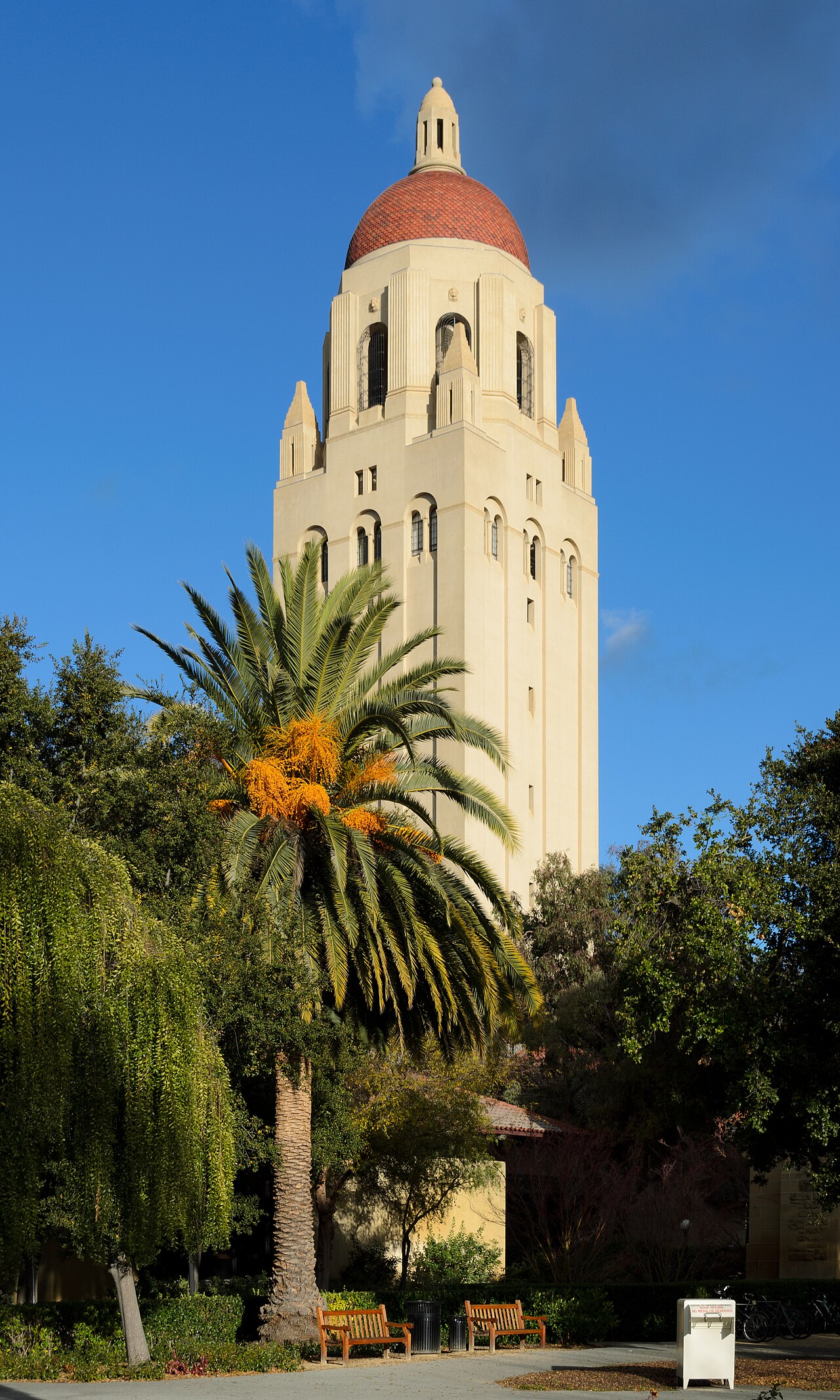
The Stanford board convened a panel under the former federal judge Mark Filip, which reviewed more than fifty thousand documents and the work of forensic image analysts. Its conclusion was carefully split: twelve papers on which Tessier-Lavigne was an author contained manipulated research data, but the panel found no evidence that he knew of or took part in the manipulation. What it did find was a laboratory culture in which such things happened and a record he had not moved decisively to correct. He resigned the presidency effective 31 August 2023, and said he would retract three papers and correct two others.
The verdict: This is the entry with no villain, and it is the most useful one here. A man may be personally honest and still preside over an operation that produces falsehood, because a large lab is a machine for converting a famous name into published results — and nobody in it is paid to bring the principal investigator bad news.
Source: Stanford Board of Trustees — Release of Report and Announcements
14
Harvard's Professor of Honesty Lost Her Tenure Over the Data in Her Papers About Dishonesty — Francesca Gino, Harvard Business School, 2021–2025
Gino was the behavioural scientist of ethics — famous for work on cheating, lying and how to make people more truthful, including the celebrated finding that signing an honesty pledge at the top of a form reduced dishonesty. In August 2021 the blog Data Colada alleged that data in a paper she co-authored had been tampered with; the paper was retracted the following month. Harvard's internal investigation found she had engaged in multiple instances of research misconduct across four papers. In May 2025 the university revoked her tenure — no Harvard professor is known to have lost it since the rules were formalised in the 1940s. She denies the allegations, has maintained her innocence publicly, and sued Harvard and the Data Colada authors for $25 million; a federal judge dismissed the defamation claims against Harvard.
The verdict: The irony is free and everyone has taken it. The harder observation is that the finding she is best known for — that a signature at the top of a form makes people honest — has itself failed to replicate. The field's most cited answer to dishonesty could not survive being tested, which is roughly the whole story of this issue in one sentence.
Source: The Harvard Crimson — Harvard Revokes Tenure From Francesca Gino
15
Cambridge’s Star Professor Resigned Over His Thesis. The University That Awarded It Had Already Ruled the Copying “Well Within the Accepted Range.” — Jason Arday, University of Cambridge and Liverpool John Moores, 2015–2026
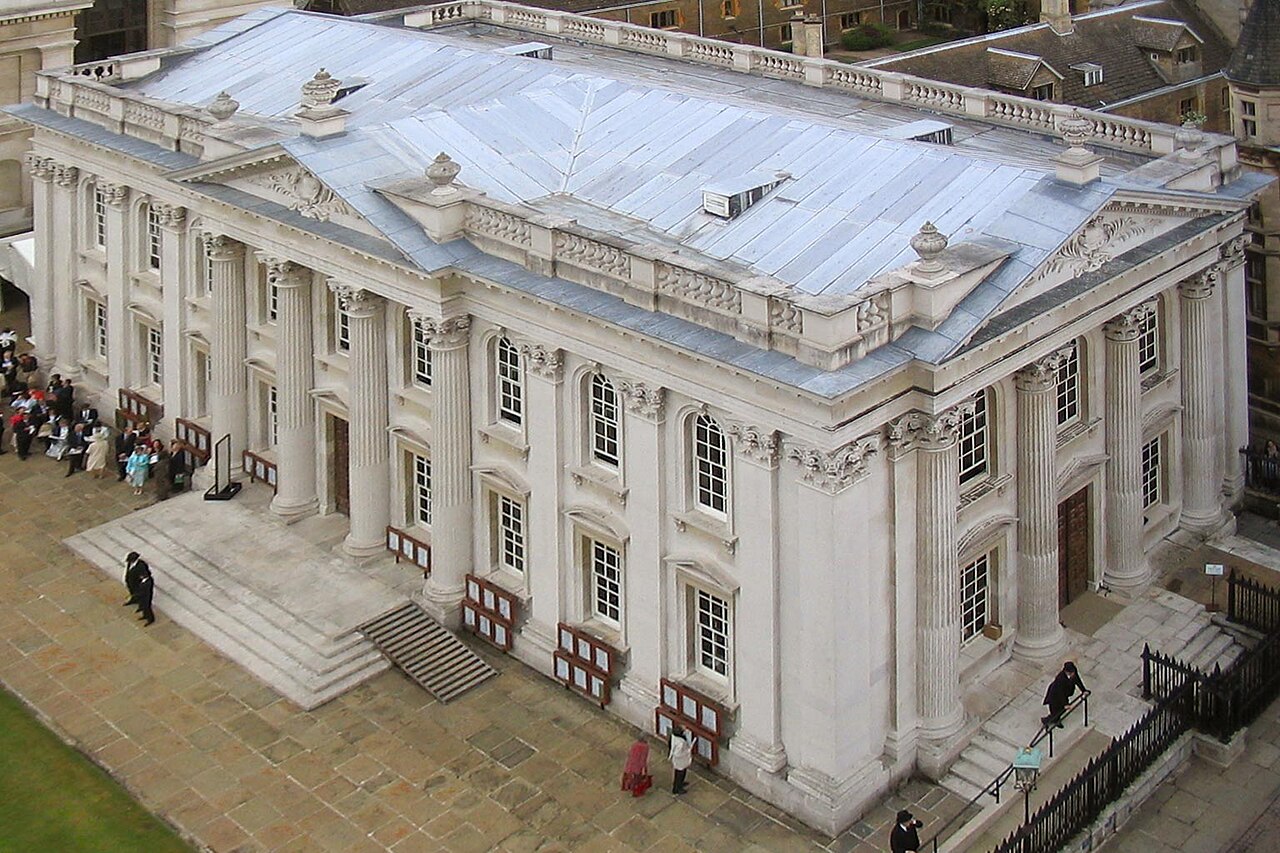
Arday was appointed to a chair in the sociology of education at Cambridge in 2023, the youngest Black professor the university had ever named, and became the sector’s favourite story about itself. In 2025 Nathan Cofnas identified dozens of passages in Arday’s 2015 doctoral thesis that appear near-verbatim in a 2009 dissertation by Paula Zwozdiak-Myers of Brunel; a fuller count reported in August 2026 put it at 188 identical or near-identical sentences. A 2018 journal article was alleged to reproduce text from work by Anjum Memon — including quotations attributed to Arday’s own interview subjects — and a second paper was formally corrected for textual overlap. Liverpool John Moores, which awarded the doctorate, examined the matter in March 2026 and concluded that the citation problems were “honest and reasonable error,” the overlap being “well within the accepted range of compliance with the academic standards of the time.” Times Higher Education had a story ready in September 2025 and spiked it after Arday instructed the defamation firm Carter-Ruck. Cambridge called the mounting evidence a “vile campaign,” then in August 2026 opened an investigation into his qualifications and honorary appointments. Arday resigned, saying that “relentless accusations, speculation and public commentary have taken a profound toll on me and on those I love.” He has attributed the failures to inadequate supervision and support, citing autism and complex learning disabilities.
The verdict: Every other case in this issue was broken by somebody with nothing to lose. This one is about the people who had something to lose and therefore did not look. A university was asked whether a thing was plagiarism and answered by moving plagiarism; the trade press of British higher education had the story in hand and folded to a single solicitor’s letter, under a libel regime where the letter never has to be right, or tested, or seen by a judge — only to cost more than silence. Take his account of his own difficulties entirely at face value and the indictment does not soften, it relocates: to the people who examined him, passed him, hired him, promoted him and put him on the poster. He has resigned. Nobody who certified him has.
Source: Retraction Watch — News outlet killed story on plagiarism allegations after Cambridge prof hired law firm
Read together, these are not fifteen bad apples; they are fifteen readings of the same instrument. In almost every case the fraud survived exactly as long as the fabricator's prestige exceeded the incentive to check him, and collapsed the moment somebody with no career at stake did the arithmetic. The moral is not that scholars are worse than other men. It is that they are the same as other men, working inside a system built on the assumption that they are better — and a system which pays in citations will, reliably, be given citations to pay for. The honest correction is not despair about science. It is the recognition that the self-correcting mechanism everyone praises is not the peer reviewer or the department chair. It is the nobody in the third row who asked to see the data.
25 special editions. A new one every fortnight. The daily catalogue of human folly — free, every morning, from a trial lawyer who has run out of patience.