Special Edition
Good Fences: Neighbors Behaving Badly
Thirteen feuds in which grown adults spent fortunes, decades and in one case two empires' worth of artillery on a strip of ground nobody wanted — from a pig in a potato patch to a High Court judgment handed down last month.
Everybody quotes the line. Good fences make good neighbours — offered at the barbecue, in the solicitor's letter, in the council's mediation leaflet, always with the air of a man producing settled wisdom. Almost nobody who quotes it has read the poem. In Frost's 'Mending Wall' the line does not belong to the narrator; it belongs to the neighbour, a man the narrator watches carrying stones in each hand 'like an old-stone savage armed,' who 'will not go behind his father's saying' and can produce no reason for the wall beyond having been told there should be one. Frost's narrator points out, mildly, that there are no cows. The wall divides apple trees from pine trees. Nothing is being kept in and nothing is being kept out, and the two men rebuild it every spring anyway. The most-quoted line in American poetry about neighbours is, in its original setting, an example of the thing the poem is against — which is a fair summary of the entire subject.
What follows is thirteen cases, arranged chronologically, in which the disputed thing was worth almost nothing and the dispute was worth almost everything. Note the arithmetic as you go, because it is the same arithmetic every time: ten dollars for a pig, and two navies; five feet of Manhattan dirt, and a four-storey building erected for no purpose but to darken a window; a few metres of Leicestershire, and three hundred thousand pounds in costs. The property lawyer's standard consolation is that boundary litigation is irrational. It is nothing of the kind. It is perfectly rational once you understand that the asset being defended was never the land. The land is merely the venue at which a man discovers what he is prepared to spend to avoid being the one who gave way.
01
A Pig Ate the Potatoes, So Two Empires Sent 2,600 Men and 84 Guns — San Juan Island, 1859–1872
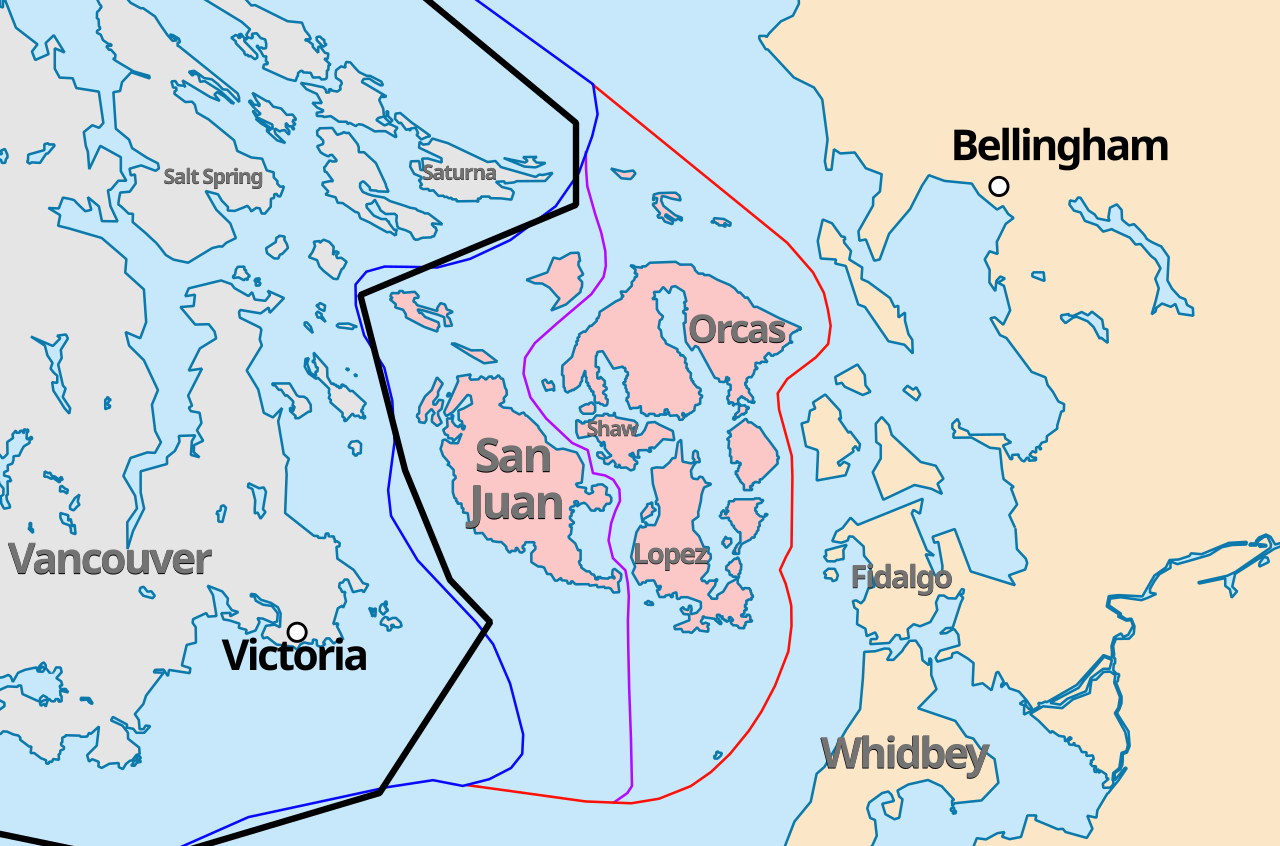
Wikimedia Commons — Ameli Sanchos, CC BY 4.0
On 15 June 1859 an American farmer, Lyman Cutlar, found a pig rooting in his garden and eating his tubers, and shot it. The pig belonged to Charles Griffin, an Irishman running the Hudson's Bay Company sheep ranch on the same island, which the United States and Britain both claimed and neither had bothered to settle. Cutlar offered ten dollars. Griffin demanded a hundred. From that gap the two governments proceeded, over the following weeks, to assemble 461 American soldiers with fourteen cannon under Colonel Silas Casey, and a Royal Navy flotilla of five warships mounting seventy guns and carrying 2,140 men. They faced each other for the better part of a decade. Both sides eventually maintained permanent camps at opposite ends of the island and, having nothing else to do, took to visiting each other for dinner. The boundary went to international arbitration under the 1871 Treaty of Washington; the commission of the German Emperor Wilhelm I found for the American position on 21 October 1872. British forces withdrew that November, the Americans in 1874. The only casualty of the Pig War was the pig.
The verdict: Every account of this affair files it under military farce, which lets the participants off far too lightly. Nobody in this story was insane; each individual step was defensible, and that is the whole horror of it. A ten-dollar offer refused is a hundred-dollar demand; a hundred-dollar demand refused is a magistrate; a magistrate is a garrison, and a garrison is a squadron. What the Pig War demonstrates is that escalation requires no madman anywhere in the chain — only a series of reasonable men, each declining to be the one who blinks, until the shipping is committed. The pig is the only party in the affair who wanted something real.
Source: Wikipedia — Pig War (1859)
02
The Railroad Baron Who Built a Forty-Foot Fence Around a Cottage He Could Not Buy — Nob Hill, San Francisco, 1876–1905
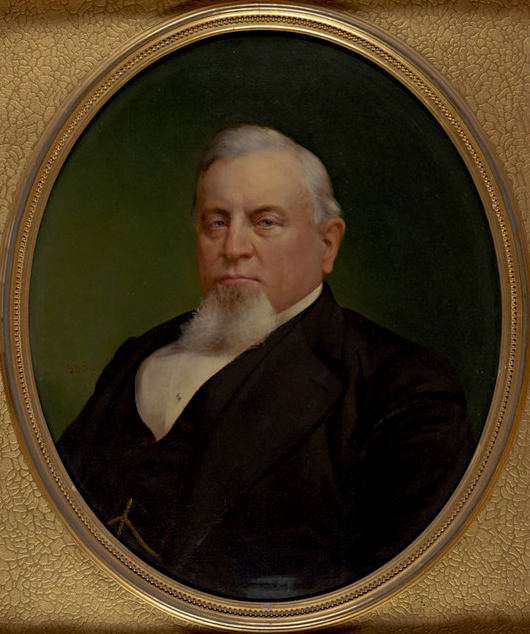
Wikimedia Commons — Stephen William Shaw, Public domain
Charles Crocker, one of the Big Four of the transcontinental railroad, wanted the whole of his block on Nob Hill for a mansion. The undertaker Nicholas Yung owned a cottage and garden on a sliver of it and would not sell. Crocker spent a reported three thousand dollars — something like seventy thousand today — erecting a wooden fence between thirty and forty feet high around three sides of Yung's home, cutting off his light and view and leaving him, in the contemporary description, at the bottom of a well. His plants died. Some accounts add that Crocker had it painted lavender. Yung's counter-offer was to mount a giant coffin on his roof, bearing a skull and crossbones, facing the mansion, as an advertisement for his trade and a note on the brevity of railroad fortunes. The fence became a tourist attraction; people rode the cable car up to look at it. In October 1877 the anti-capitalist Workingmen's Party of California held a demonstration at it. Yung died in 1888 without selling. His widow held the lot; his daughters sold at last, and the fence came down in 1905.
The verdict: Crocker could buy a railroad and could not buy a cottage, and the fence is what a man builds when he has discovered, in late middle age, that there exists a category of thing money does not reach. Note that it did not work: Yung kept his house for twelve more years and his family kept it for seventeen after that, while the fence stood there converting the richest man on the hill into a civic joke and a recruiting poster for the labour movement. That is the peculiar economy of spite — it is the only expenditure that reliably purchases the opposite of what it was bought for.
Source: KQED — Boomtown Memories: The Nob Hill Fence That Spite Built
03
The Feud That Killed a Dozen People Began With a Dispute Over the Notches in a Hog's Ear — Tug Fork, Kentucky and West Virginia, 1878–1891
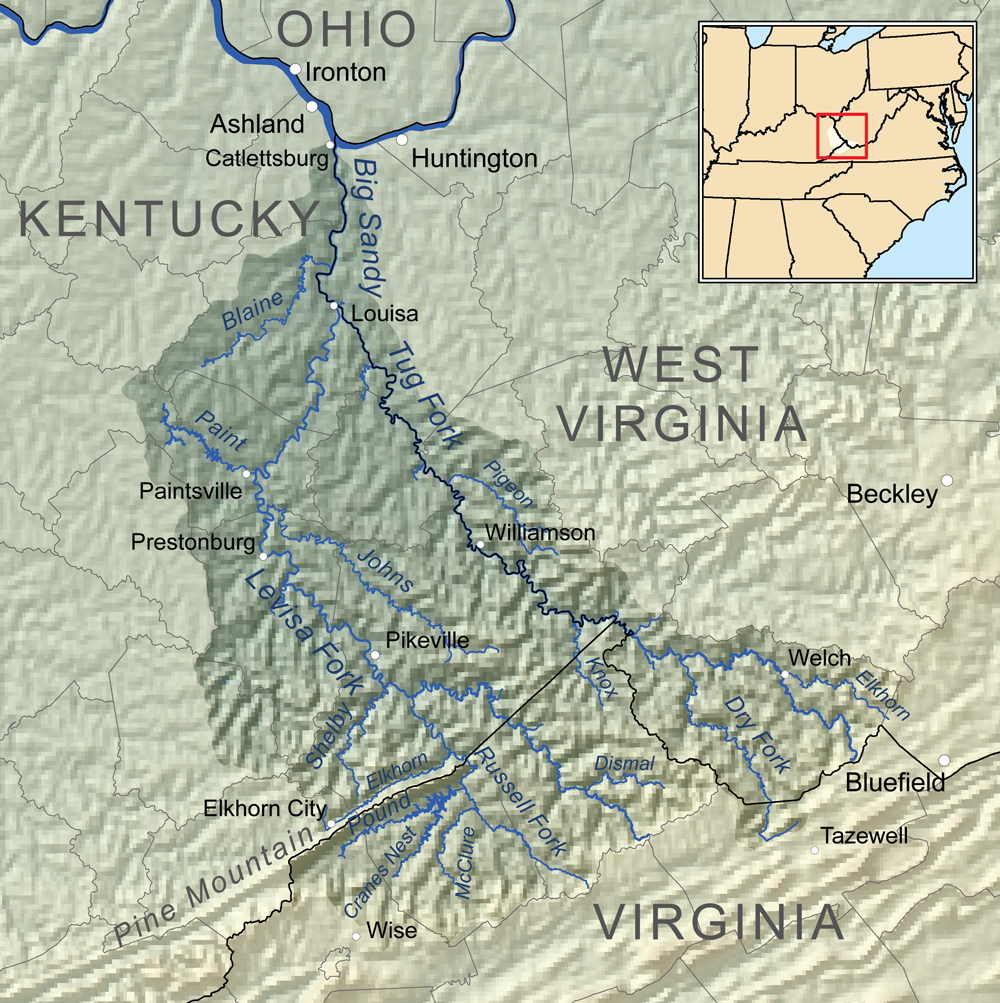
Wikimedia Commons — Kmusser, CC BY-SA 3.0
In 1878 Randall McCoy saw a hog in Floyd Hatfield's possession and said it was his, on the evidence of the notches cut in its ears — McCoy marks, he insisted, not Hatfield ones. The matter went before the local justice of the peace, Anderson 'Preacher Anse' Hatfield, who ruled for the Hatfields on the testimony of Bill Staton, a man related to both families. In June 1880 Staton was killed by two McCoy brothers, Sam and Paris, who were acquitted on grounds of self-defence. From 1880 to 1891 more than a dozen members of the two families died. The fighting was formally declared over on 7 May 1891; the trials ran on until 1901. Historians are clear that the hog was not the sole cause — the killing of Asa Harmon McCoy in 1865 and the ordinary Appalachian business of land, timber and elections all fed it — but the hog is where the two families first submitted their disagreement to a court, and the hog is what the court got wrong.
The verdict: The instructive detail is not the pig; it is the courtroom. Both families did the civilised thing first. They took their dispute to a magistrate, accepted his jurisdiction, called a witness, and received a verdict — and the verdict, delivered by a Hatfield on the word of a man related to everybody, was the moment the McCoys concluded that the machinery was not available to them. What follows in the record is not a failure of law but a withdrawal from it, and the withdrawal was rational on the evidence they had. Every long feud contains, somewhere near the beginning, a tribunal that one side stopped believing in.
Source: Wikipedia — Hatfield–McCoy feud
26 special editions. A new one every fortnight. The daily catalogue of human folly — free, every morning, from a trial lawyer who has run out of patience.
No algorithms. No engagement bait. Just the view from the abyss.
04
He Wanted Five Thousand for a Strip Five Feet Wide. Offered One, He Built a Four-Storey Building on It. — Lexington Avenue and 82nd Street, New York, 1882–1915
Joseph Richardson owned a strip of Manhattan five feet wide and 104 feet long — useless in itself, and adjoining the plot on which the clothier Hyman Sarner intended to put up an apartment house. Sarner offered a thousand dollars. Richardson wanted five. Sarner refused and, by the surviving account, called him a tightwad. Richardson thereupon built, on a footprint five feet across, a four-storey apartment building a hundred and four feet long, positioned to take the light and the view from Sarner's new development. He and his wife lived in it themselves until his death in 1897. It stood until 1915, when it was demolished for a larger building.
The verdict: Consider what he actually did. Denied a four-thousand-dollar profit, he financed and occupied a structure five feet wide — narrower than a man is tall — and lived in it for fifteen years, in order that a clothier should have a worse window. The spite house is the purest artefact in this entire catalogue because it is spite made load-bearing: a grudge with a foundation, a roof, and a tax assessment. Most men's resentments are cheap because they are temporary. Richardson's cost him a building and every remaining year of his life, and he paid it in full, on time, without complaint.
Source: Ephemeral New York — The story of the Upper East Side spite house
05
The City Took His Land and His Neighbor Declined to Help, So He Built a House That Blocks the Neighbor's Front Door — Alameda, California, 1908
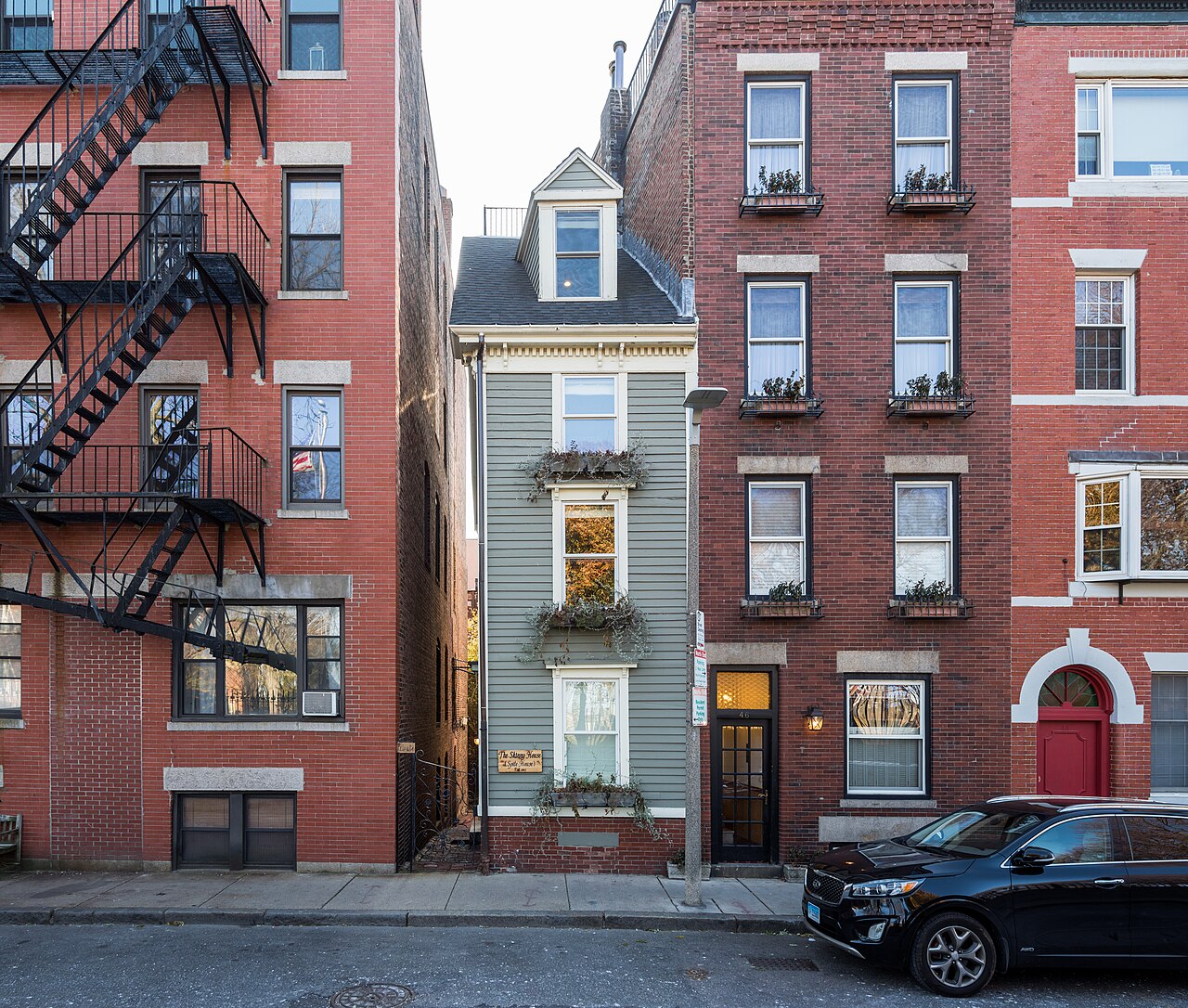
Wikimedia Commons — Rhododendrites, CC BY-SA 4.0
Charles Froling inherited a parcel in Alameda and meant to build on it. The city took most of it for a road and refused him permission for the house he wanted. He asked his neighbor to join the objection; the neighbor, reasoning that a man who fights the city may find the city interested in his own lot, declined. On the strip that was left Froling built a house ten feet wide, fifty-four feet long and twenty feet high — some eleven hundred square feet of floor, in a building the width of a hallway — sited so that it takes the sunlight from the neighbor's windows and stands close enough that the neighbor can barely open his front door. The words SPITE HOUSE are set above the entrance. It is still there, and still occupied.
The verdict: The city was the party that robbed him; the neighbor merely failed to volunteer for a fight that was not his. Froling built his monument facing the neighbor. This is the reliable physics of the genre: the aggrieved man aims not at the institution that harmed him, which is armoured, insured, and staffed by people who will still be there next year, but at the nearest available human who declined to take his side — because that man can be reached, and being reached is the entire point. Grievance always seeks the softest surface within walking distance.
Source: Weird California — The Spite House, Alameda
06
Britain Found It Necessary to Pass an Act of Parliament About Hedges — Westminster and every suburb in England, 1999–present
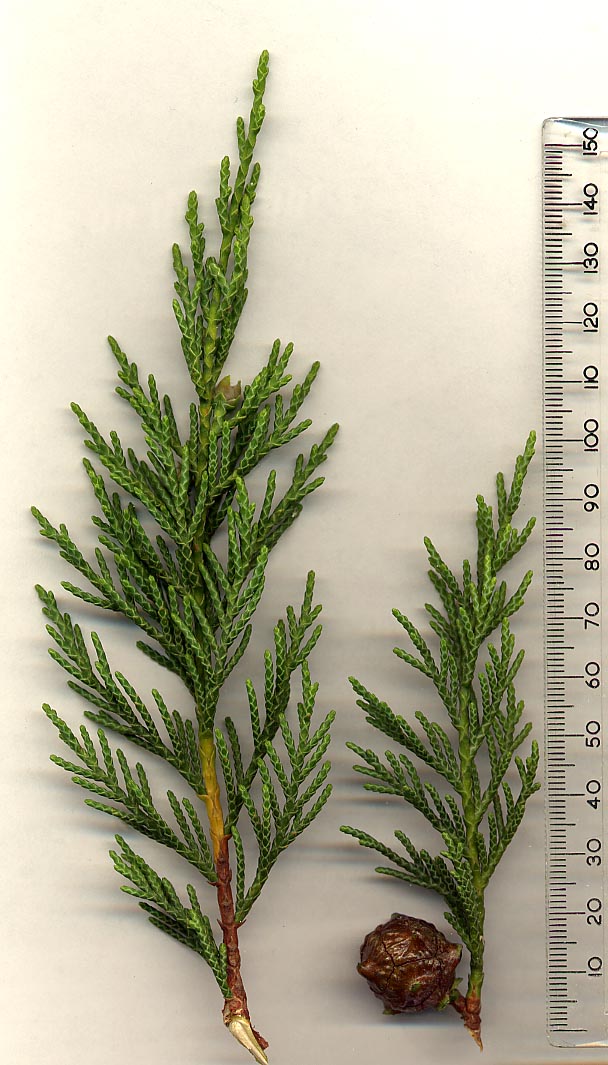
Wikimedia Commons — CC BY-SA 3.0
In 1999 a man who had spent twenty years trying to get his neighbour's ten-and-a-half-metre hedge cut back finally won his case, at a cost of some £100,000 in legal fees. He was not an isolated eccentric; the Leyland cypress — leylandii, which grows about a metre a year and has been voted the country's most hated garden plant — had by then produced enough entrenched suburban warfare that Parliament legislated. Part 8 of the Anti-social Behaviour Act 2003 came into force in 2005, and since then an English householder may complain to his council about two or more evergreens in a row exceeding two metres. The council charges a fee, which runs from a few hundred pounds to over six hundred depending on the authority, considers the effect on reasonable enjoyment, and may order the hedge cut. Failing to comply is a criminal offence carrying a fine of up to £1,000.
The verdict: A legislature is a finite instrument. Every hour the Commons spent on the height of conifers was an hour not spent on something else, and it spent them because a sufficient number of English householders had demonstrated that, left to themselves, they would rather ruin themselves in court than knock next door about a shrub. That is what the High Hedges legislation actually records: not a gap in the law, but a documented national inability to conduct a two-minute conversation over a fence. The statute is the country's own written confession, and it is on the books.
Source: Stephensons Solicitors — The tree that could cost you
07
She Blasted Music at the House Next Door for Twenty-Nine Months Because, Thirteen Years Earlier, the Woman Had Moved In Without Saying Hello — Heguri, Nara Prefecture, Japan, 2002–2006
Miyoko Kawahara, 59, of Heguri in Nara Prefecture, aimed a portable stereo at her next-door neighbour's house — six metres away — and played dance and rock music at high volume for close to twenty-four hours a day. She began in November 2002 and continued until her arrest on 11 April 2005: twenty-nine months. She ignored the local authorities throughout. Her neighbour developed insomnia and headaches, and Kawahara was prosecuted and convicted not of a noise offence but of inflicting injury. She was sentenced to a year; on appeal the Osaka High Court took the unusual step of increasing it, to twenty months. Prosecutors told the court the grievance dated to 1989, when the neighbour moved in and failed to come round and introduce herself.
The verdict: Thirteen years is the number to sit with. For thirteen years this woman lived beside a discourtesy she had never mentioned, kept the account open, and accrued interest on it daily until the debt was large enough to justify a stereo. That is not rage, which burns out; it is bookkeeping, which does not. And the medical charge is the correct one — the court's finding was that continuous sound directed at a human being is an assault conducted at a distance of six metres, delivered in instalments, by a person who never had to look at what she was doing. The greeting she was owed in 1989 would have taken forty seconds.
Source: Gulf News — 'Mrs Noisy' gets a year in prison
08
A Developer Built Two Extra Floors Over a Neighbour's Light. The High Court Ordered Them Taken Down Again. — Toronto Square, Leeds, 2010
HKRUK II (CHC) Ltd added a sixth and seventh storey to an existing office block in Leeds, in the knowledge that the work might infringe the right to light enjoyed by 2 Infirmary Street, a Grade II listed Victorian building belonging to Marcus Heaney. Heaney sought a mandatory injunction. The interference with his light was assessed at under one per cent. The cost of removing the completed floors was estimated to exceed a million pounds. Applying the Shelfer principles, which place the burden on the developer to show why an injunction should not issue, the High Court granted it and ordered the two storeys removed. The developer appealed and then settled on undisclosed terms on the steps of the court.
The verdict: The case is famous among property lawyers for the proposition that a developer cannot simply build first and write a cheque afterwards, and it is right about that. What makes it belong in this collection is the ratio: one per cent of one building's daylight, set against two completed storeys of another. Everybody involved understood the arithmetic and proceeded anyway — the developer because he had priced the neighbour's rights as a line item, the court because a right that can be compulsorily bought at the buyer's convenience is not a right but a tariff. The two extra floors were an assertion that the man next door was a cost. The injunction was the answer to that assertion, and it cost a million pounds to write.
Source: Anstey Horne — Rights to Light case law: HKRUK v Heaney
09
He Bought the House Next Door to His Ex-Wife and Installed a Twelve-Foot Bronze Middle Finger, Lit at Night — Bloomfield Hills, Michigan, 2013
Alan Markovitz, a Detroit strip-club proprietor, bought the property adjoining his former wife's house and erected in the back garden a twelve-foot bronze sculpture of a hand making an obscene gesture, reportedly costing seven thousand dollars, oriented towards her home and floodlit so that it could be read after dark as well as before. He told reporters the gesture was aimed principally at her new partner. The installation became national news after a family member photographed it and put the picture on the internet, which is to say that the audience Markovitz had built the thing for was the only part of the plan that worked.
The verdict: Seven thousand dollars is the least of it; he bought a house. A man in possession of the freedom to live anywhere on earth selected, out of all available addresses, the one from which he could see the person he was trying to stop thinking about, and then installed a permanent bronze reminder to look. The statue faces her; he faces it. Every evening the spotlights come on and illuminate, for the benefit of the whole street, a fourteen-foot advertisement of who in that arrangement had failed to move on.
Source: Business Insider — Detroit man's middle-finger statue
10
Two Couples Took a Question About Whether a Gate Should Be Open or Shut to the High Court — Freshfield Road, Formby, Merseyside, 2014
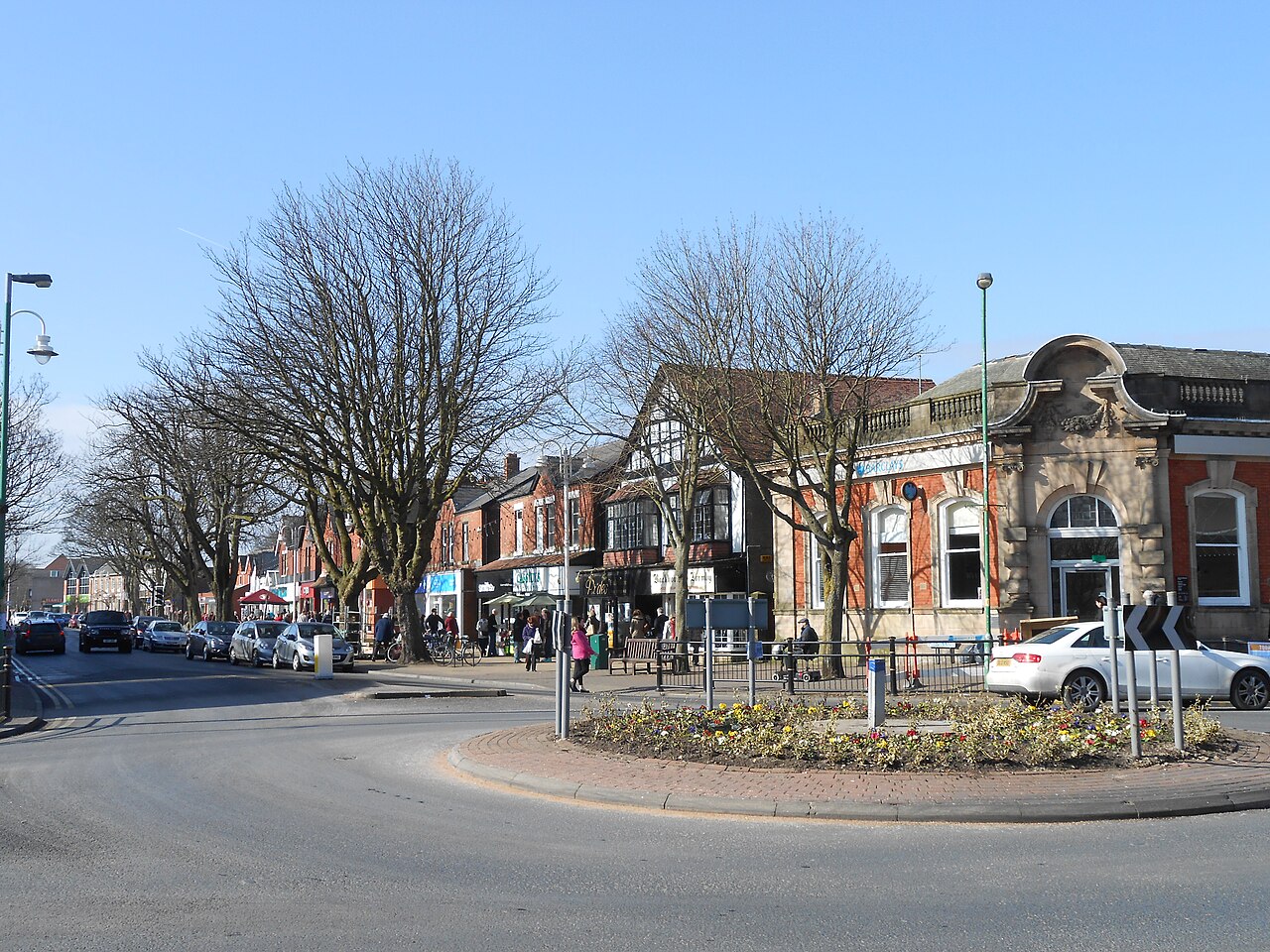
Wikimedia Commons — Rept0n1x, CC BY-SA 3.0
The Bradleys wanted the gates between the two properties kept closed, for security. The Heslins wanted them open, for access to the drive. Neither would give way, and the question of who owned and might operate a pair of gates arrived in the Chancery Division before Mr Justice Norris, dressed up in adverse possession, proprietary estoppel and easements. He held that the Bradleys had an equitable easement to open and close the gates so far as that did not substantially interfere with the Heslins' reasonable enjoyment, and that the Heslins could not padlock the northern gate open. He then addressed the economics. The parties' bills were expected to run into six figures. Electrically operated gates, he observed, would have cost in the region of five thousand pounds and given everybody what they wanted. He noted that in a contested neighbour case even the victor is not a winner, given the blight such a case casts over the properties, and he came out in favour of requiring parties to attempt mediation before trial.
The verdict: A judge of the High Court of England and Wales, in a reserved judgment, was obliged to explain to four adults that the object of their disagreement retailed at five thousand pounds. What Norris J identified — and it is the sharpest sentence in the whole subject — is that the winner also loses, because the judgment does not go away when the litigation does: it stays, on the file and on the title, and both houses have to be sold eventually to somebody who reads it. They were not litigating over a gate. They were litigating over which of them had been unreasonable since 2011, and the court has no jurisdiction to award that.
Source: Civil Litigation Brief — Some things may be better mediated than litigated
11
Her Neighbours Objected to Her Building Plans, So She Painted the House in Red and White Stripes — South End, Kensington, London, 2015–2021
After neighbours in one of the more expensive streets in London objected to Zipporah Lisle-Mainwaring's plans for her three-storey Georgian townhouse, the building appeared in broad red and white stripes, like seaside rock. The Royal Borough of Kensington and Chelsea served notice that the paintwork was incongruous with the streetscape of South End and the local area and gave her twenty-eight days to remove it. She fought. The dispute ran for two years through appeals and into the High Court, where Mr Justice Gilbart held in 2017 that the decoration was entirely lawful and the council had no power to order it removed. She subsequently obtained her permission, and in 2021 the striped house was demolished to make way for the replacement she had wanted all along.
The verdict: The house is gone; the stripes lasted six years; the objections delayed the redevelopment by rather less than the litigation did. What survives is the local authority's formal position, which was that a colour scheme may be prohibited for being incongruous with the streetscape — a doctrine under which the borough would have to demolish most of its own back extensions. The neighbours objected to a building they would have to look at for a decade and received, by return, a building they had to look at while it was still standing, and then the original building anyway. Everybody in this story got precisely what they asked for and nobody got what they wanted.
Source: Time Out London — This Kensington candy house has earned the right to keep its stripes
12
A Stream, a Fence, a Few Metres of Leicestershire, and Legal Costs Above Three Hundred Thousand Pounds — Court of Appeal, 11 November 2024
Ms Narga bought Brook Barn in 2020, read the title plans, and concluded that her boundary ran past the fence on the northern bank of the stream, across the water, and onto a strip of the southern bank. The adjoining owners — the Claphams at 24 The Green and the Wrights at 25 and 26 — disagreed. The disputed ground was between two and five metres deep. The Court of Appeal, in Clapham v Narga [2024] EWCA Civ 1388, held for the adjoining owners and confirmed that they were entitled to be registered as the owners of the disputed land, and took the opportunity to restate that a title plan is a general boundary and not a survey of where the line actually falls. Combined legal costs in the case were reported to exceed £300,000.
The verdict: The doctrinal point is genuinely useful, and every conveyancer in England now cites it: the red line on the Land Registry plan is drawn to a tolerance measured in metres and was never intended to answer the question people keep asking it. But the case is also a warning about the specific danger of the recent arrival, who has bought the house, printed the plan, measured nothing, and is therefore in possession of a document that agrees with him. Three hundred thousand pounds is what it cost to establish that the map was not the ground — a proposition available free of charge to anyone who has ever walked down to the stream and looked at the fence.
Source: Anstey Horne — Boundary dispute case law: Clapham & Wright v Narga
13
Thirteen Years, Two High Court Appeals and a Trip to the Court of Appeal Over 'a Trivial Strip of Land'. Damages: Nine Thousand Pounds. — Chancery Division, 31 July 2026
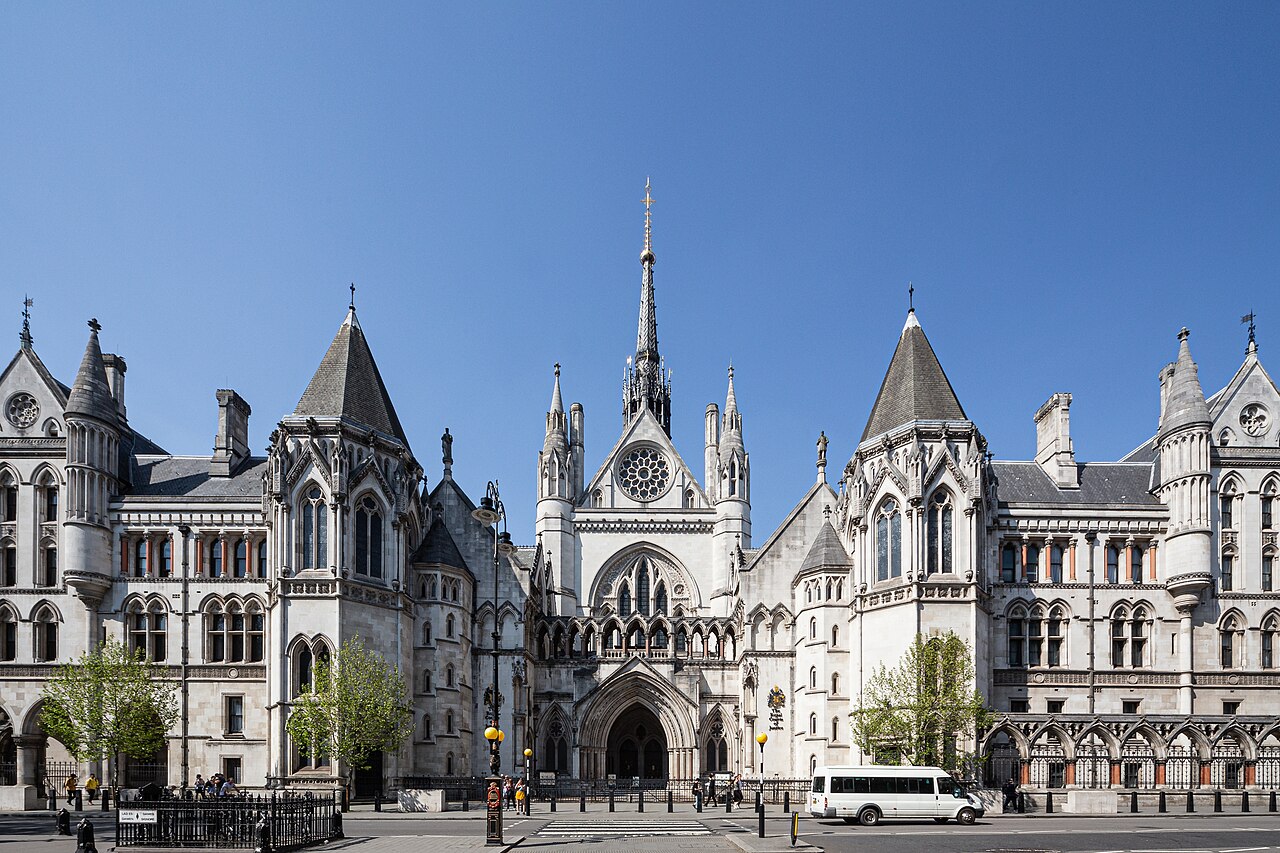
Wikimedia Commons — This image was produced by me, David Castor (user:dcastor). The pictures I submit to the Wikipedia Project are released to the public domain. This gives you the right to use them in any way you like, without any kind of notification. This said, I would still appreciate to be mentioned as the originator whenever you think it complies well with your use of the picture. A message to me about how it has been used would also be welcome. You are obviously not required to respond to these wishes of mine, just in a friendly manner encouraged to. (All my photos are placed in Category:Images by David Castor or a subcategory thereof.), CC0
Gibson v New [2026] EWHC 1862 (Ch) concerns a small area of garden between two properties. Judgment was handed down on 31 July of this year. By then the dispute had consumed thirteen years and passed through multiple trials, two appeals to the High Court, an application to the Court of Appeal and proceedings in the First-Tier Tribunal. The trial judge described the litigation as unusually disproportionate, difficult and frustrating even by the standards of boundary disputes, and the disputed ground as a trivial strip of land. The damages awarded were £9,500, reduced on appeal to £9,000 to reflect a period of mitigation. Costs went to the successful respondents, subject to a one per cent reduction for the appellants' narrow success on a single ground.
The verdict: Thirteen years is a childhood. It is the whole of a mortgage term's better half, and the parties spent it in the company of solicitors, discussing a strip of garden whose value the court has now fixed, definitively and on the record, at nine thousand pounds — a figure that would not cover the transcripts. The judge's phrase is the epitaph the genre has been waiting for: unusually disproportionate even by the standards of boundary disputes, a sentence that presupposes a standard, and a standard that is already a scandal. It came down last month, which is the only detail that matters here. Nothing in this collection is historical.
Source: Holmes & Hills Solicitors — Neighbour dispute ends after 13 years
Read together, the thirteen have one structural feature in common, and it is not stubbornness. It is that in every case there existed, from the first week, a solution costing roughly nothing. Ten dollars for the pig. Five thousand for the strip. Five thousand pounds for a set of electric gates, which is what Mr Justice Norris worked out the Formby gate war could have been settled for before it consumed six figures and two households. In not one case was the cheap solution unavailable, unknown, or unaffordable. It was merely unacceptable, because accepting it would have meant conceding that the other man's account of the last two years was as good as your own.
That is the diagnosis, and it is not confined to fences. The disputes escalate not despite being trivial but because they are trivial: a large grievance can be settled by compromise, since both parties can point to what they got, whereas a grievance over a few feet of grass admits of no dignified split. There is nothing to divide. There is only the question of who was right, which is the one commodity no court can award and no neighbour will sell. The men in these pages did not lose their proportion; they applied it exactly, to the wrong quantity. They were never valuing the land. They were valuing themselves, and on that valuation they turn out to be, every one of them, remarkably generous.
Frost's narrator, incidentally, loses. The wall goes back up.
26 special editions. A new one every fortnight. The daily catalogue of human folly — free, every morning, from a trial lawyer who has run out of patience.