Special Edition
Nobody Ever Saw the Saucer: Extraterrestrial Visitors Behaving Badly
Ten Minuteman missiles disarmed by their own side, a reactor built to fly over civilians, Harvard spending a year prosecuting a conclusion, and the Grey that a New York painter invented to order.
This is the first special in this series that does not rest on adjudicated fact. Everywhere else — the strikings-off, the convictions, the audit findings, the lost battles — somebody with authority eventually wrote down who was at fault. Here nobody has. So the rule for this issue is narrow, and we have kept to it: not one entry below claims that any craft or any occupant ever existed. Every claim made here is a claim about human conduct in the documentary record — what air forces, courts, clinicians, universities, research societies and newspapers actually did on paper, where the paper survives and can be checked.
It turns out that is more than enough. Take the visitors entirely on trust or dismiss them entirely; either way the record of the past seventy years is a record of institutions, and the institutions behaved with remarkable consistency. They investigated and concealed. They diagnosed what they could not explain. They disciplined conclusions rather than methods. They suppressed their own disconfirming tests. They mislaid the file until a statute prised it loose.
Where an entry rests on something we could not pin to a primary source, the entry says so. That is not hedging. It is the entire difference between this issue and the literature it draws on.
01
Ten Missiles Went Down and the Air Force Wrote “Disproven” in the File — The Paperwork · Malmstrom AFB, Montana, 1967–2025
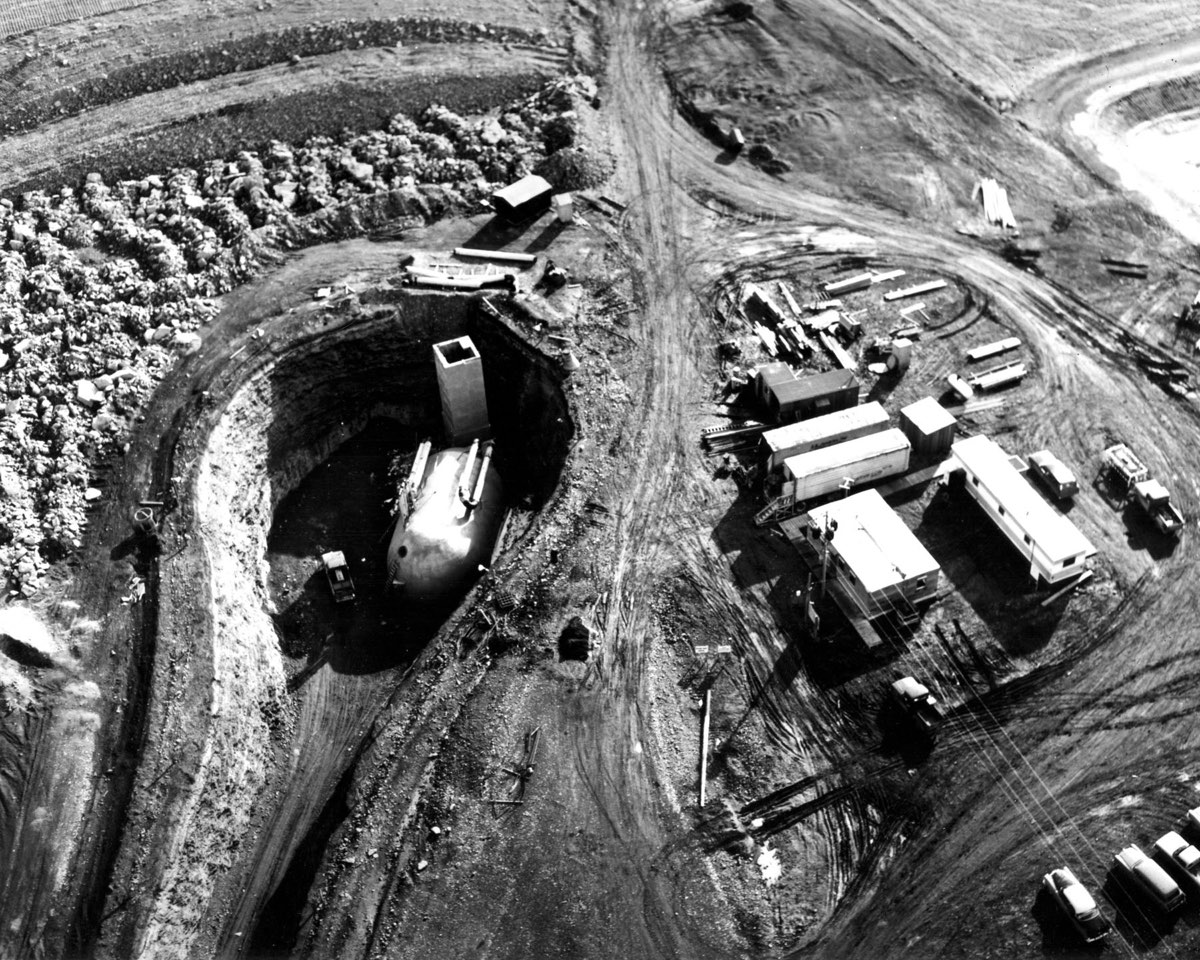
Wikimedia Commons — U.S. Air Force photo, Public domain
On 16 March 1967 at 0845 every launch facility in Echo Flight at Malmstrom Air Force Base, Montana, dropped off strategic alert. The Air Force's own unit history records it in the flat voice of an institution describing weather: “On 16 March 1967 at 0845, all sites in Echo (E) Flight, Malmstrom AFB, shut-down with No-Go indications.” Ten Minuteman I intercontinental ballistic missiles, gone in an estimated ten to forty seconds. The technical team could not establish a cause. The same document also disposes of the rumours circulating among the men who had been standing over the things: “Rumors of Unidentified Flying Objects (UFO) around the area of Echo Flight during the time of the fault were disproven.” Robert Salas publicised an account of objects manoeuvring over the site in the Great Falls Tribune on 13 August 1996; his better-known Oscar Flight claim sits outside the documentary record and is not this event. In June 2025 the Wall Street Journal reported, in a piece headed “The Pentagon Disinformation That Fueled America's UFO Mythology,” that the shutdown was caused by an unannounced classified test of an electromagnetic pulse device. The qualification matters: reporting on that attribution is not consistent — other accounts of the same work describe a cascading transformer failure from an electrical storm, and the relevant official history was still forthcoming. Take the EMP finding as a newspaper's report, not as a settled fact.
The verdict: Whatever went over Montana, something went through the missiles, and the likeliest candidate is the United States. It disabled ten of its own nuclear weapons, did not tell the men guarding them, wrote “disproven” in the margin, and left fifty-eight years of open space where a memorandum should have been. Mythology is what grows in a vacuum. The Air Force built the vacuum and then complained about the weather in it.
02
Harvard Spent a Year Investigating a Conclusion — The Committee · Harvard Medical School, 1994–95
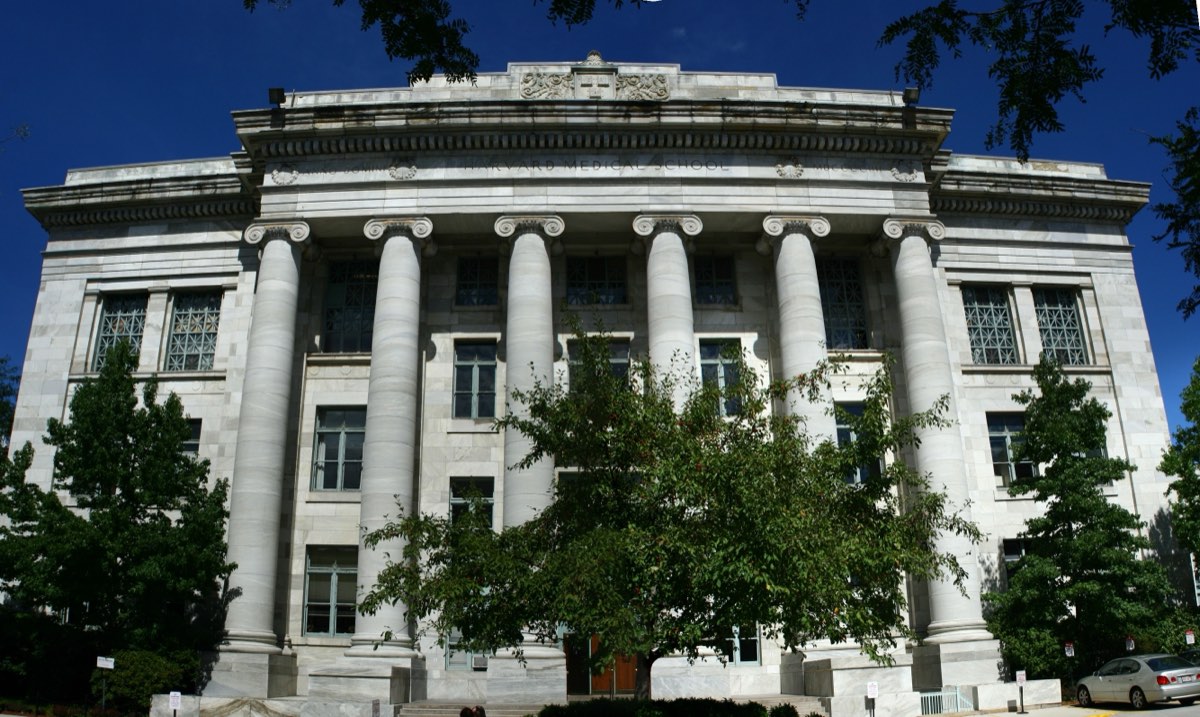
Wikimedia Commons — Thomas Steiner, CC BY-SA 2.5
John E. Mack was a professor of psychiatry at Harvard Medical School and a Pulitzer Prize winner. He interviewed some two hundred people who said they had been taken, and concluded that they were neither mentally ill nor lying. Be precise about what he claimed, because it is misreported in both directions: he did not simply assert that extraterrestrials were real, but that the experiences were real to the experiencers in a way Western materialism could not absorb. In May 1994 Dean Daniel C. Tosteson appointed a committee of peers to review Mack's clinical care and clinical investigation of these patients — the first time in Harvard's history that a tenured professor had been subjected to such an inquiry. The chair was Dr Arnold S. Relman, formerly editor of the New England Journal of Medicine. The Harvard Crimson, reporting on 17 April 1995, recorded the crucial point plainly: the body had been convened “as an ad hoc fact-finding committee, not as part of a disciplinary or misconduct committee.” No misconduct was alleged, because none was suspected. Its draft report found that Mack “adds no new evidence on the subject” and offered “only unsubstantiated reports of UFOs as support for the stories of ‘abduction.’” Writing in June 1995, Keith Thompson counted “more than 30 closed-door hearings over the past year.” Qualification: the inquiry's closing statement is widely reported to have reaffirmed “Dr. Mack's academic freedom to study what he wishes and to state his opinions without impediment,” and he did retain his tenure — but we have not been able to pin that wording to a primary source, and so it is given here as reported rather than as quoted.
The verdict: More than thirty closed-door hearings and an unprecedented proceeding, with the former editor of the New England Journal of Medicine in the chair, to establish that a man had reached a conclusion the institution disliked. Note what the draft report actually complained of: not a falsified record, not a mistreated patient, but an absence of new evidence — which is a criticism of a finding, not of a method. Asked about it, the university said that “it is the policy of Harvard University to neither confirm nor deny information relating to personnel matters.” A body that spends a year interrogating an answer and then declines to say so has not defended the standards of evidence. It has merely demonstrated that it has some.
03
America Designed a Flying Reactor and Cancelled It for Want of Somewhere to Test It — The Crowbar · Livermore and Jackass Flats, 1957–1964
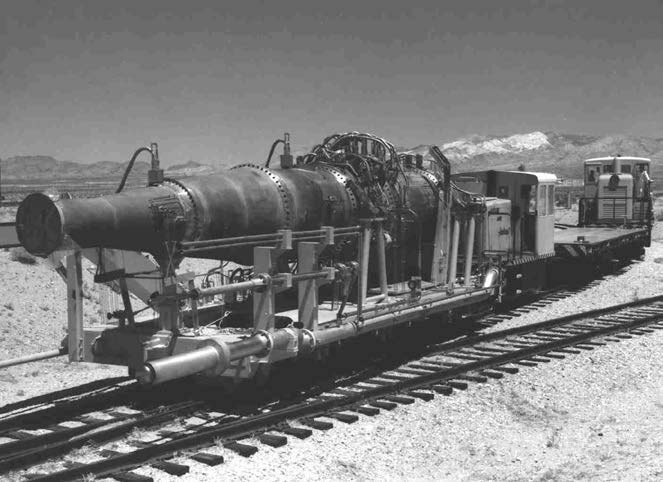
Wikimedia Commons — Federal Government of the United States, Public domain
Every time a witness reports a craft of impossible performance somebody says: it was ours. The reason that never sounds absurd is Project Pluto. From January 1957 the Lawrence Radiation Laboratory at Livermore developed a nuclear-powered ramjet, and in 1963 the Air Force selected Vought as airframe contractor for SLAM — the Supersonic Low-Altitude Missile. The reactor Tory-IIC was run to full power on the ground on 20 May 1964 at Jackass Flats in the Nevada Test Site, where twenty-five miles of oil-well casing had been laid to store the compressed air needed to simulate flight. The machine trailed radioactive exhaust by intention. It was built to fly low and fast over hostile territory, and everything beneath its flight path was part of the weapon. It was cancelled in July 1964, partly because ballistic missiles arrived sooner, and partly because nobody could work out how to test it without irradiating somebody.
The verdict: This is the mundane explanation, and it is worse than the exotic one. No visitor from another star has ever been shown to have harmed a human being. The United States, meanwhile, drew up a reactor to fly over populated ground, costed it, built it, ran it at full power in the desert, and abandoned it for want of a test range rather than for want of a conscience.
27 special editions. A new one every fortnight. The daily catalogue of human folly — free, every morning, from a trial lawyer who has run out of patience.
No algorithms. No engagement bait. Just the view from the abyss.
04
The Deputy Base Commander Filed It. Nothing Happened for Two Years. — The Memo · RAF Woodbridge, Suffolk, 1980–83

Wikimedia Commons — Simon Leatherdale, CC BY-SA 2.0
December 1980, Rendlesham Forest in Suffolk, beside a base housing American airmen in Britain. Lieutenant Colonel Charles Halt, the deputy base commander, wrote a single page to the Ministry of Defence on 13 January 1981, headed “Unexplained Lights.” It recorded three depressions an inch and a half deep and seven inches across where the object was said to have rested, and beta/gamma readings of 0.1 milliroentgens taken at the site. It is a careful document. Halt did not speculate; he wrote down what was measured. Nothing visible then happened with it. It reached the American public in 1983, under the American Freedom of Information Act.
The verdict: Take either horn. Either something landed beside a NATO installation in Suffolk and the chain of command found it unremarkable, or the deputy commander of an American base in Britain filed radiation readings with a foreign ministry of defence and nobody in either government thought the matter worth a second page. Both readings describe an institution rather than a spacecraft. And note which of the three parties finally produced the document: not the air force, not the ministry, but a disclosure statute.
05
The Launch Panel Lit Up in Ukraine, and the Scoop Was Stolen Rather Than Verified — The Chain of Custody · Byelokoroviche, Ukrainian SSR, 1982–94
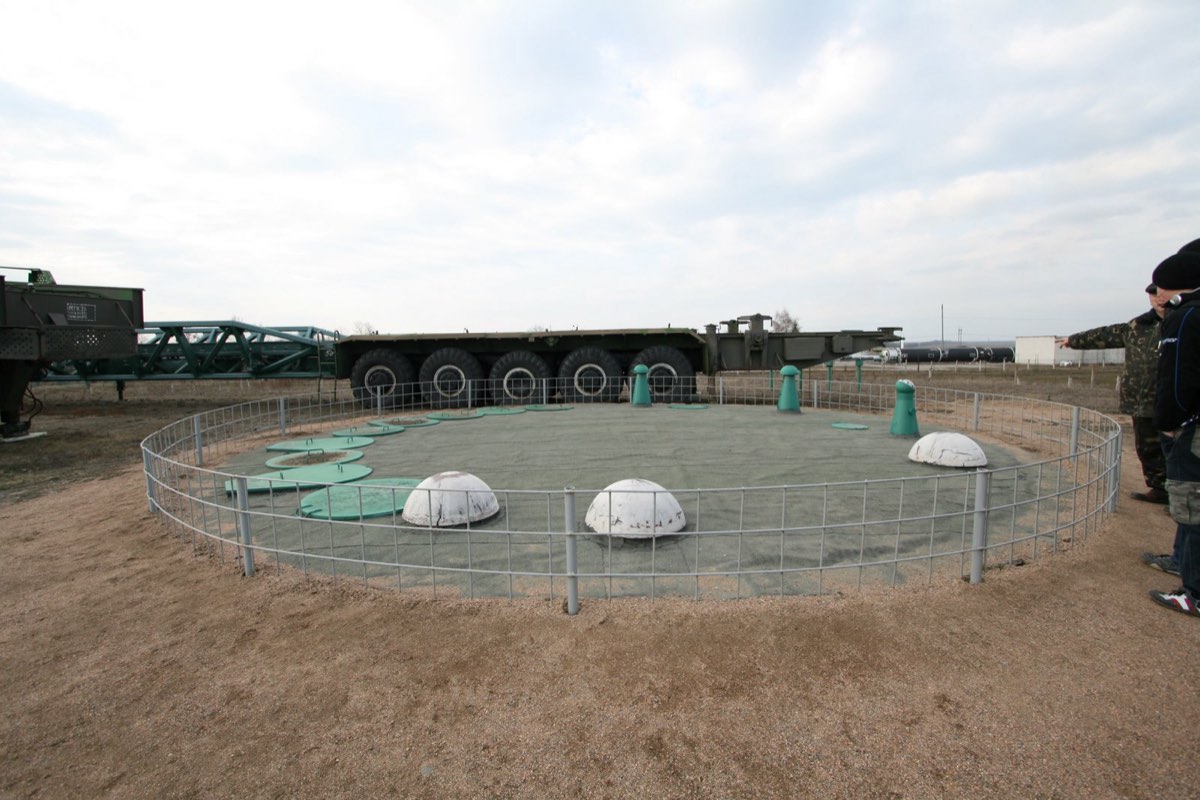
Wikimedia Commons — Michael, CC BY 3.0
On 4 October 1982, over an ICBM base near Byelokoroviche, the board in the control room is said to have lit as though the missiles had been readied against their programmed targets, with no code entered by any hand. The state held about fifteen seconds and cleared itself. Moscow, telephoned at once, had issued no order. The witness named in the accounts is a radio operator, Vladimir Matveyev. Now the qualification, which is the reason this entry is here at all: none of that is independently verified. It reaches the West through KGB files obtained by the Las Vegas reporter George Knapp, and was broadcast in October 1994 on ABC's Prime Time Live — which used his documents and his source leads without crediting him. No Soviet or Russian archive has released anything confirming the panel event.
The verdict: So: two superpowers, each maintaining that something unexplained brushed against its nuclear command chain, and neither able to produce the paper. And an American network which, given the story of the century, distinguished itself by lifting it from the man who dug it out. Whatever passed over Byelokoroviche, the only documented misconduct in this entry is terrestrial and occurred in a newsroom.
06
The Clinician Ruled Out Lying, Then Explained a Black Man's Terror by His Marriage — The Diagnosis · Portsmouth, New Hampshire and Boston, 1961–1967
Wikimedia Commons — William Trost Richards, CC0. Illustrative only — not a depiction of any person or object named in this entry.
Barney Hill (1922–1969) was a wartime veteran and a postal employee; Betty (1919–2004) was a social worker. They were an interracial couple at a time when that was uncommon — he Black, she white. They were also joiners: NAACP members both, Barney the local chapter's legal redress officer and a member of its regional board, chairman of the board of the Rockingham County Community Action Program, and in 1965 appointed to the New Hampshire State Advisory Committee to the U.S. Commission on Civil Rights. (A state advisory body, not the federal Commission itself, as is often said — and a real honour.) After the drive home through the White Mountains in September 1961 they went, in December 1963, to Dr Benjamin Simon in Boston, a distinguished specialist in hypnosis and in war trauma. Weekly sessions ran from 4 January to 27 June 1964. Simon did not think them liars and said so. What he concluded was that Betty's nightmares — which began over a week after the event, ran five consecutive nights with little variation, and which she wrote up in detail as dreams — had “assumed the quality of a fantasised experience” and had been absorbed by Barney in conversation. He named the mechanism folie à deux. He attributed their anxiety substantially to the strain of an interracial marriage in a predominantly white part of the country, and indicated that Barney may have exhibited persecutorial thoughts. He allowed that the question could not be settled “in an absolute way.” Qualification: the interracial-strain and “persecutorial thoughts” material reaches us largely through session accounts published by Betty Hill's niece, an interested party, and we have not seen Simon's own text. Treat it as reported rather than as quoted.
The verdict: Folie à deux requires a psychotic primary, a dependent secondary and — decisively — an isolated pair. The Hills sat on boards. Whatever crossed Route 3 in 1961, the diagnosis is a document about America between 1961 and 1967: a man reports something, a physician establishes that he is not lying, and then accounts for his terror by reference to whom he married. Two years before it was written, that man had been asked to advise the state of New Hampshire on civil rights.
07
They Ran the Test, Disliked the Answer, and Left It Out of the Newsletter — The Omission · Snowflake and Heber, Arizona, 1975
Wikimedia Commons — USDAgov, Public domain. Illustrative only — not a depiction of any person or object named in this entry.
On 5 November 1975 the crew chief Michael Rogers reported the logger Travis Walton missing to the Navajo County sheriff; the crew reported to Sheriff Marlin Gillespie and Deputy Kenneth Coplan at Heber. Ground and air searches over five days found nothing. Walton reappeared near Heber on 10 November, dehydrated and distressed. That same day the six remaining crewmen were polygraphed by Cy Gilson, an examiner Arizona law enforcement used regularly, on whether they had harmed or concealed him and whether they had seen an unusual aerial object. This entry takes no position on what became of Travis Walton, and does not need one. On 15 November Walton was polygraphed by John J. McCarthy and failed. The consent statement is dated 15 November 1975 and signed by Walton; McCarthy's report to the National Enquirer is dated the 16th and concludes the account was a hoax. The Aerial Phenomena Research Organization published a full account of the case in its November 1975 newsletter and did not mention the test.
The verdict: An organisation founded to investigate the phenomenon investigated the phenomenon, obtained a result it did not care for, and kept it out of the bulletin. That six men passed a polygraph and one failed another would tell you very little either way. What is genuinely informative is that the believers ran the experiment and then buried it, which is the conduct of a church rather than of an inquiry.
08
Four Men Hypnotised Separately, Counted as Four Witnesses — The Method · Allagash Wilderness, Maine, 1976–2016

Wikimedia Commons — Shadow2700, Public domain
In August 1976 the brothers Jack and Jim Weiner, with Charlie Foltz and Chuck Rak, were a fortnight into a canoe trip in the Allagash when, on the 20th, they saw a light over the water. The abduction narrative did not exist then. It emerged years afterwards under hypnosis, in separate sessions, and the separateness was treated as corroboration — four independent accounts converging on one night. It went out on Unsolved Mysteries to a national audience. In 2016 Rak said publicly that the abduction element had been fabricated, that the party had been smoking hashish that night, and that they had hoped to make money from it.
The verdict: The men are not the folly here. The arithmetic is. Hypnotise four friends separately about the same evening and you have not obtained four witnesses; you have asked the same question four times and called the answers a consensus. The investigators who could not see that were not investigating. They were counting.
09
The Air Force Ran the Operation, Wrote It Down, Sealed It, and Had to Be Made to Admit the File Existed — The Archive · Colares, Pará, Brazil, 1977–2009

Wikimedia Commons — Carlão Limeira, CC BY-SA 4.0
Between roughly October 1977 and January 1978 the Brazilian Air Force ran a field operation out of the Belém base — Operação Prato — interviewing hundreds of witnesses in Colares and in some thirty other villages north of Belém. The first mission ran from 20 October to 11 November 1977, the second from 29 November to 5 December. This was not a rumour; it was a funded military operation that generated paper. The paper was then classified. It came out by way of a Brazilian freedom-of-information petition in 2004, enforced by the Ministry of Defence in 2008, with a batch released in 2009 and the documents registered by date and time in the National Archives.
The verdict: Note the sequence, because it is this whole issue in miniature. An air force takes a phenomenon seriously enough to spend months on it, writes down everything it finds, locks the findings away, and then must be compelled by its own transparency machinery to concede the existence of a file it created itself. Whatever was over Pará, the institutional reflex was identical to the reflex in Montana, in Suffolk and in Ukraine. Across four countries and three political systems it never varied by a degree.
10
Forty Years, and the Neighbours Have Never Once Seen the Saucer — The Closer · New York, 1964–2026
Wikimedia Commons — Astrobond, CC BY-SA 4.0. Illustrative only — not a depiction of any person or object named in this entry.
Whitley Strieber described the events of 26 December 1985 in Communion (1987), including an invasive examination. He has since said, in interviews and in conversation, that it was a rape and that he had been too embarrassed to use the word at the time. That word belongs to the later account and not to the 1987 page, and it is not put in quotation marks here. What concerns us is duration. The account has never closed: A New World (2019) is built around an entirely new cycle of encounters beginning in 2015, after thirty-three years of them, and the books continue — The Fourth Mind in 2025, Transformation 2026 this year. Four decades, and no neighbour has ever seen the craft.
Then there is the face. Strieber's cover was painted by Ted Seth Jacobs with Strieber sitting beside him directing revisions, police-sketch fashion, and it became the definitive Grey of the century. It originated nothing. Barney Hill described and drew wraparound eyes in a session dated 22 February 1964, twenty-three years earlier. Betty Hill's own earlier written account described short dark-haired men with large “Jimmy Durante” noses — the description migrated over time toward the face we now think standard. NBC put the Hill beings on national television in 1975, with James Earl Jones as Barney. (A sceptical favourite — that an Outer Limits episode broadcast twelve days before Barney's session supplied the eyes — rests on a single feature and a coincidence of dates; we mention it and decline to lean on it.) Nor is the wider record uniform: the Pascagoula, Villas-Boas and Kelly–Hopkinsville accounts describe creatures with almost nothing in common.
The verdict: Which is the point, and it requires no spacecraft to explain. A wildly heterogeneous body of reports narrowed, across four decades, onto one commissioned painting made in an apartment on East 83rd Street. That is what a culturally supplied template looks like from the inside. Humanity was handed the largest imaginative opportunity in its history — the chance to conceive of a mind that was not its own — and could only produce itself with better equipment: voyeuristic, invasive, clumsy, evasive about the paperwork. Then it could not even manage that much independently. It settled on one picture, and has remembered it ever since as a face that it saw.
Set the ten side by side and the visitors are the least interesting party present. They arrive, they hover, they take, they are never once photographed by a neighbour, and they leave behind precisely as much evidence as an absence would.
The humans, meanwhile, generated a paper trail of quite extraordinary richness, and every page of it is a page about concealment, self-injury or category error: a nuclear force that disarmed itself and filed the word “disproven”; a reactor built to fly over people and abandoned for want of a test range; a medical school that spent a year prosecuting an answer; a physician who ruled out deceit and then reached for a syndrome his own patients contradicted; a research society that ran a polygraph and buried it; an air force that had to be sued for its own filing cabinet.
We asked for seventy years whether anyone was out there. The answer, recorded in our own hand and kept in our own archives, is that it would not much have mattered. We could have told them nothing about ourselves that this file does not already say, and we have proved incapable of imagining a mind that is not simply ourselves with better equipment. The saucer is optional. The paperwork is damning.
27 special editions. A new one every fortnight. The daily catalogue of human folly — free, every morning, from a trial lawyer who has run out of patience.